
Access Lafayette County Probate Court Records
Lafayette County probate court records are filed with the Clerk of Circuit Court in Mayo and cover estate administration cases, wills, guardianship matters, and related proceedings handled under Florida law in the 3rd Judicial Circuit. This page explains where to find those records and how the probate process works in Florida's smallest county by population.
Lafayette County Quick Facts
Lafayette County Clerk of Court
The Clerk of Circuit Court in Mayo is the office where all Lafayette County probate cases are filed and maintained. The clerk accepts petitions, wills, inventories, accountings, and final orders. Due to the county's small size, most people find it easiest to call ahead or visit in person rather than relying on online tools.
| Clerk of Court | Lafayette County Clerk of Circuit Court |
|---|---|
| Address | P.O. Box 88, Mayo, FL 32066-0088 |
| Phone | (386) 294-1600 |
| Website | flclerks.com - Find a Clerk |
| Hours | Monday - Friday, 8:00 AM to 5:00 PM |
Lafayette County is in the 3rd Judicial Circuit, which covers Columbia, Dixie, Hamilton, Lafayette, Madison, Suwannee, and Taylor counties. The 3rd Circuit's site at jud3.flcourts.org provides forms, local rules, and general information about probate proceedings in all seven counties of the circuit.
The statewide clerk directory at flclerks.com is a reliable way to confirm current contact details for the Lafayette County clerk's office before you call or visit.
The screenshot below shows the clerk directory page where you can look up current contact information for Lafayette County and any other Florida county clerk.

Confirming contact details before you travel is especially important for a small, rural county like Lafayette, where office staff can be limited and hours may change seasonally.
How to Search Lafayette County Probate Records
Probate records in Lafayette County are public under Florida law. Because this is one of Florida's smallest and most rural counties, access options differ from larger urban counties.
In person. Visit the courthouse in Mayo. Clerk staff can search by the deceased person's name or case number and provide copies of documents on file. Copy fees apply per page. Bring the full name of the deceased and the approximate date of death to help the search go faster.
By phone. Call (386) 294-1600. Staff can confirm if a case exists, provide a case number, and tell you what documents are on file. They cannot provide legal advice about how to handle your case.
Online access. Lafayette County is a very small county and online case search access may be limited compared to larger Florida counties. Check the current status of any online portal by calling the clerk's office first or checking the 3rd Circuit's website.
By mail. Send a written request to P.O. Box 88, Mayo, FL 32066. Include the decedent's full name, approximate date of death, and what records you need. Ask for a fee estimate before sending payment if you are not sure of the copy costs.
The Florida Courts self-help page provides official resources for people navigating probate without an attorney, including forms and step-by-step instructions.
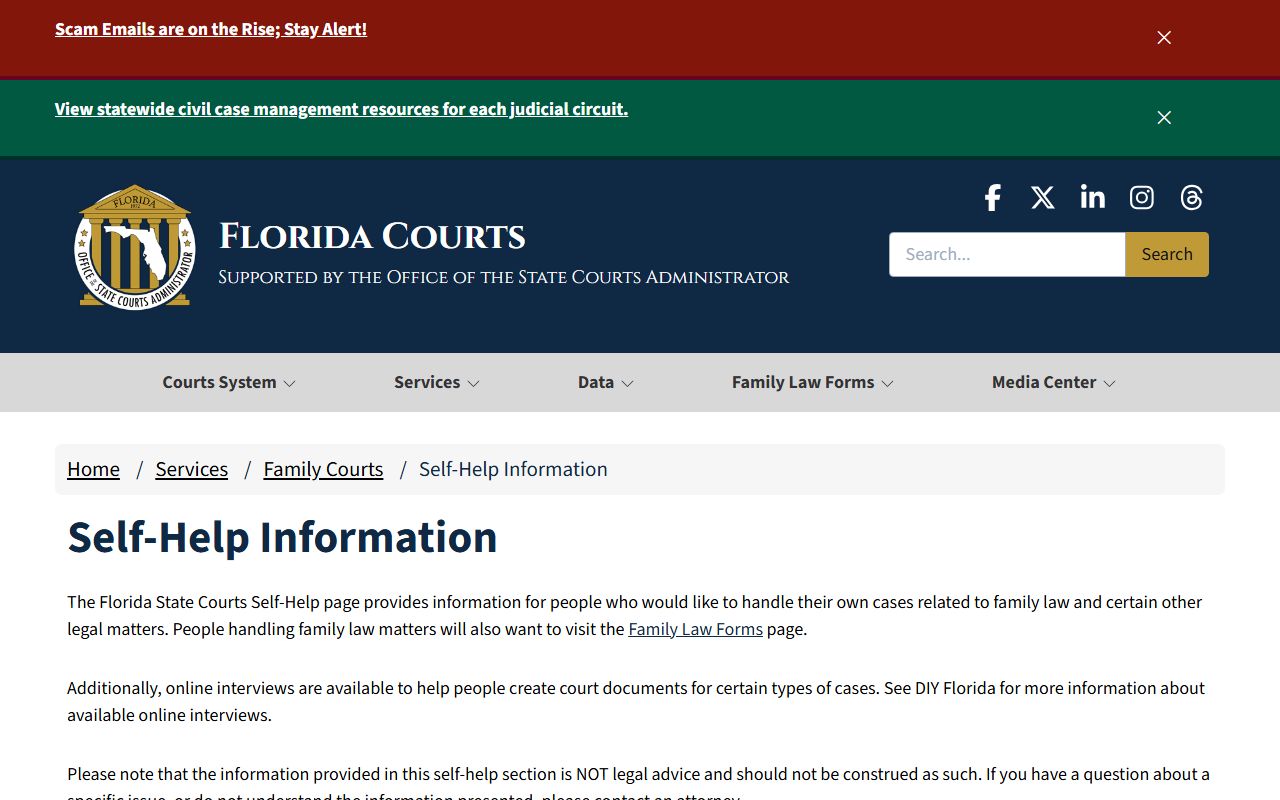
The Florida Courts self-help center is available to all Florida residents and includes approved court forms and guidance for probate proceedings in Lafayette County and every other county in the state.
Probate Types Available in Lafayette County
Florida law gives three options for handling a deceased person's estate. The right choice depends on the value of the assets and how long the person has been deceased. All three are available to Lafayette County residents and governed by Chapters 731 through 735 of the Florida Statutes.
Formal Administration
Formal administration is the full probate process. It is required when the probate estate is worth more than $75,000. A judge appoints a personal representative to manage the estate. That person files an inventory, publishes a notice to creditors, pays valid claims from estate assets, and submits a final accounting before the court closes the estate. Chapter 733, Florida Statutes governs each step of this process.
Formal administration in Lafayette County takes at least six months. The creditor waiting period alone accounts for three months of that minimum. Estates involving real property, contested claims, or unclear asset ownership take longer. Most families work with a probate attorney during this process because the paperwork is detailed and the personal representative can be held personally liable for errors.
Summary Administration
Summary administration is faster and much simpler. Florida law allows it when the total non-exempt estate assets are $75,000 or less, or when the deceased person has been dead for two or more years regardless of the estate's value. Chapter 735, Florida Statutes governs this process. No personal representative is appointed. A petitioner files directly with the clerk, and if the court approves the petition, it issues an order that transfers assets to beneficiaries. Summary administration can often wrap up in weeks rather than months.
Disposition Without Administration
This is the smallest and least formal option. It applies only when the estate has no real property and the total personal property value is less than the unpaid cost of the deceased person's funeral and final medical expenses. The threshold is generally around $6,000. Under Chapter 735, the clerk can authorize this without full court proceedings. It is useful mainly for reimbursing whoever paid those final expenses. No estate is formally opened and no personal representative is appointed.
Florida Probate Laws That Govern Lafayette County Cases
All probate proceedings in Lafayette County follow Florida's probate code. Chapter 731 sets definitions and general provisions. Chapter 732 handles intestate succession, covering the order in which a deceased person's relatives inherit when there is no valid will. Florida's intestate rules follow a specific order: surviving spouse, then descendants, then parents, then siblings and their descendants, continuing through more distant relatives.
Chapter 733 covers formal administration. It defines the personal representative's duties, sets the timeline for each step, explains how creditors are notified and paid, and spells out the final accounting and discharge process. Chapter 735 covers the two simplified procedures.
One thing that often surprises people is that a will must be filed with the clerk of the circuit court in the county where the deceased person lived within ten days of death. This is a legal requirement under Chapter 732 that applies even if no probate proceeding is being opened. In Lafayette County, that means filing with the clerk in Mayo.
Florida homestead rules are another area worth knowing. Real property that qualifies as homestead under the Florida Constitution may not need to pass through probate, but the rules about who can inherit homestead are complex. They differ depending on whether the deceased had a surviving spouse or minor children. Many Lafayette County residents own rural land, so these rules matter a great deal in practice.
Legal Resources Available to Lafayette County Residents
Legal help can be harder to access in rural counties, but these resources are available statewide and can assist Lafayette County residents.
Florida Courts self-help. The Florida Courts self-help center has probate forms approved for use in Florida courts, along with plain-language instructions for each type of proceeding. It is free and accessible online.
3rd Circuit resources. Visit jud3.flcourts.org for forms, administrative orders, judge information, and local procedural guidance specific to Lafayette County and the rest of the 3rd Circuit.
Florida Bar referral service. The Florida Bar at floridabar.org can help you find a licensed probate attorney. Attorneys serving neighboring counties like Columbia and Suwannee often handle Lafayette County cases as well.
Legal aid. Three Rivers Legal Services covers Lafayette County and provides free help to income-eligible residents. Contact them directly or ask the clerk's office for a referral when you visit the courthouse in Mayo.
The Florida Courts website at flcourts.gov also provides general information about the probate process, rules, and court forms that apply across the state.
Cities in Lafayette County
Lafayette County has only one incorporated community: Mayo, which serves as the county seat and is where the courthouse and clerk's office are located. All probate cases for Lafayette County residents are filed there. No city in Lafayette County meets the population threshold for a dedicated city records page.
Nearby Counties
Lafayette County borders several other North Florida counties in the 3rd Circuit and nearby circuits. Click any link below for probate records information for neighboring counties.