
Search Seminole County Probate Records
Seminole County probate court records are filed and maintained by the Clerk of Court in Sanford, serving estates and decedents with property in the county. The 18th Judicial Circuit handles all probate matters for Seminole County, including formal administration, summary administration, and disposition without administration cases. Whether you need to locate an open estate, confirm a will was filed, or request copies of probate documents, the Seminole County Clerk provides both online case lookup and in-person access at the courthouse on North Park Avenue.
Seminole County Quick Facts
Seminole County Probate Court
The Seminole County Clerk of Court, currently Grant Maloy, manages all probate filings for the county. The probate division is part of the Circuit Court and handles cases filed under Florida's Probate Code, found in Chapters 731 through 735 of the Florida Statutes. The clerk's office is located at the Seminole County Courthouse in Sanford, the county seat.
| Clerk of Court | Grant Maloy |
|---|---|
| Address | 301 N Park Ave, Sanford, FL 32771 |
| Phone | (407) 665-4330 |
| Website | seminoleclerk.org |
| Hours | Monday - Friday, 8:00 AM to 5:00 PM |
The clerk's website offers online case search tools, e-filing options, and downloadable forms. Probate cases are listed under civil court records in the online search portal. You can search by case number, decedent name, or personal representative name.
The 18th Circuit covers both Seminole and Brevard counties. Each county handles its own probate filings through its local clerk's office. If a decedent owned property in both counties, separate filings may be needed in each.
Lead-in: The Seminole County Clerk of Court website provides online case lookup for probate records filed in the county.
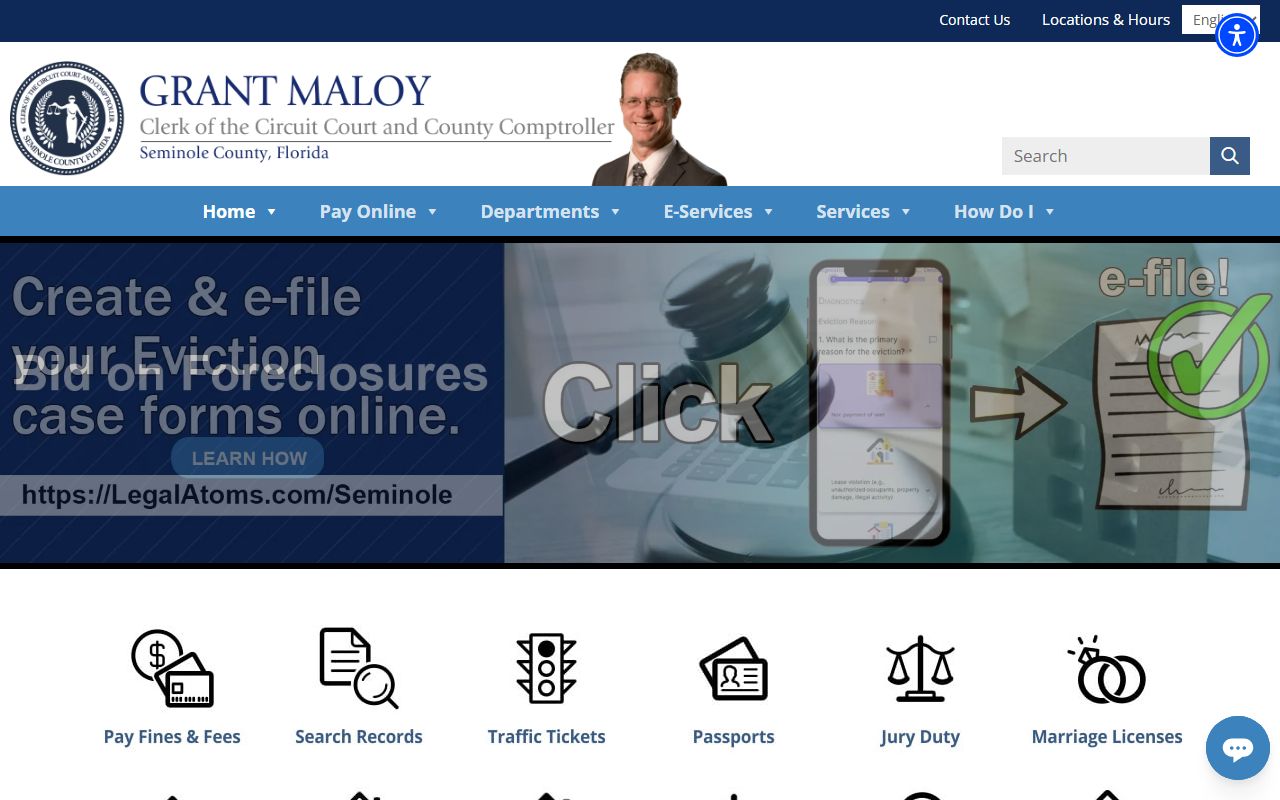
The site allows users to search active and closed probate cases without creating an account.
How to Search Probate Records in Seminole County
The Seminole County Clerk provides several ways to look up probate court records. The easiest starting point is the online case search tool at seminoleclerk.org. You can search without logging in. Enter the decedent's last name or a case number if you have one. Results will show case status, filing date, and the names of parties involved.
Keep in mind that not all probate documents are available online. Florida law prohibits posting probate records on publicly accessible websites in some circumstances. You may find a case listing but need to visit the clerk's office or submit a written request to get the actual documents. Inventories and accountings are confidential under Florida law and are not open for public inspection.
To request copies by mail, send a written request to the probate division at 301 N Park Ave, Sanford, FL 32771. Include the decedent's full name, approximate date of death, and any case number you have. Prepay for copies if you know the page count, or ask the clerk to invoice you first.
In-person requests are handled at the clerk's office during regular business hours. Staff can pull case files, provide certified copies, and confirm whether a will has been deposited with the court. Note that wills deposited for safekeeping but not yet admitted to probate are sealed and only accessible to the testator or by court order.
The Florida Courts system also maintains a statewide find-a-clerk directory. You can locate Seminole County clerk contact details and links through the Florida Courts Find a Clerk page.

This statewide directory is useful if you need to confirm clerk contact details or find the right office for multi-county estate matters.
Types of Probate Cases Filed in Seminole County
Florida law sets out four main types of probate proceedings. The type that applies to a given estate depends on its size, the type of assets, and how long the decedent has been deceased.
Formal Administration is required for estates valued over $75,000 or when a personal representative needs to be appointed to act on behalf of the estate. This is the full probate process. It involves filing a petition, having the court appoint a personal representative, notifying creditors, and eventually distributing assets. The process typically takes six months to a year or more in Seminole County, depending on the complexity of the estate and whether any disputes arise. An attorney is required for formal administration unless the personal representative is also the sole beneficiary.
Summary Administration is a faster, simpler process for smaller estates. It is available when the estate's total value (excluding exempt property) is $75,000 or less, or when the decedent has been dead for two or more years. No personal representative is appointed. Instead, beneficiaries petition the court for an order of summary administration, which directs asset holders to release property to the rightful heirs. This process can sometimes be completed in a matter of weeks.
Disposition Without Administration is the simplest option. It does not involve filing a probate case with the court in the traditional sense. Instead, a family member files an affidavit with the clerk to collect personal property up to $6,000 that is exempt from creditor claims and needed to pay funeral or final medical expenses. No real property can be transferred this way.
Ancillary Administration applies when a person dies in another state but owned real estate or other property in Florida. The out-of-state estate is the primary proceeding, and the Florida ancillary proceeding handles only the Florida assets. Ancillary cases must be filed in the county where the Florida property is located.
Filing Fees and Copy Costs
Seminole County follows the state fee schedule set by Florida law for probate filings. Fees are based on the estimated value of the estate and the type of proceeding. You pay the filing fee when you submit your initial petition to the clerk.
For formal administration, the filing fee is typically several hundred dollars and increases with estate value. Summary administration fees are lower. The clerk's office can give you the exact fee when you call or visit. You can also check the fee schedule posted on the seminoleclerk.org website under the probate or civil court section.
Certified copies of probate documents cost approximately $2 per page plus a $1 certification fee per document. Standard non-certified copies are cheaper. Letters of Administration and other official court documents used to manage estate assets nearly always need to be certified. Banks, title companies, and other institutions typically require certified copies before releasing assets.
If you are filing on behalf of a low-income estate, the court may waive certain fees. Ask the clerk about fee waiver procedures when you file. There is a formal process for requesting a waiver, and the court decides based on the estate's financial situation.
Other costs to budget for include attorney's fees if an attorney is required, publication costs for creditor notices (formal administration requires publishing a notice to creditors in a local newspaper), and potential appraisal fees if personal property needs to be valued.
The Probate Process in Seminole County
Opening a probate case in Seminole County starts with filing the right petition at the clerk's office. For formal administration, this means submitting the original will (if one exists), a petition for administration, and supporting documents that identify the decedent, the heirs, and the assets. The clerk assigns a case number and the file goes to a probate judge in the 18th Circuit.
Once the court appoints a personal representative and issues Letters of Administration, the representative can act on behalf of the estate. This includes collecting assets, paying debts and taxes, filing any required inventories with the court, and ultimately distributing what remains to the beneficiaries. The personal representative must file a Notice of Administration and serve it on interested parties, giving them time to file any objections.
Creditors have three months from the date the Notice to Creditors is published in a newspaper (or 30 days from personal service, whichever is later) to file claims against the estate. Once that window closes, most creditor claims are barred. This creditor notice period is one reason formal administration takes time.
The estate can be closed once all debts are paid, taxes handled, and assets distributed. The personal representative files a petition for discharge, and the court issues an order closing the estate. All filings throughout this process become part of the public probate record, with the exception of confidential documents like inventories and accountings.
Wills must be deposited with the Seminole County Clerk within 10 days of learning of a person's death, per Florida Statutes section 732.901, even if the family does not plan to open a probate case right away. Failure to do so can result in legal liability.
Legal Resources and Self-Help
The Florida Bar's website at floridabar.org offers a lawyer referral service if you need to find a probate attorney in Seminole County. You can search by county and practice area. Many probate attorneys offer free initial consultations.
Legal aid is available for low-income residents through Community Legal Services of Mid-Florida, which serves Seminole County. Their contact information is available at clsmf.org. They may be able to help with summary administration or other simpler probate matters.
The Florida Courts self-help center at selfhelp.flcourts.org has forms and guides for many probate procedures. These resources do not replace legal advice but can help you understand the process and prepare basic documents.
The Florida Probate Code itself is available online through the Florida Legislature's website at leg.state.fl.us. Chapters 731 through 735 cover all aspects of probate law in Florida, including definitions, procedures, rights of creditors, and rules for distribution of assets.
Cities in Seminole County
Seminole County includes cities such as Sanford, Altamonte Springs, Casselberry, Lake Mary, Longwood, Oviedo, and Winter Springs. None of these cities meet the population threshold for a dedicated city page on this site. All probate filings for residents of these cities go through the Seminole County Clerk of Court at 301 N Park Ave in Sanford.