
Access Plantation Probate Court Records
Probate court records for Plantation, Florida are filed and managed through Broward County and the 17th Judicial Circuit. When someone who lived in Plantation dies with assets in their name, the estate must go through the probate process at the Broward County Courthouse in Fort Lauderdale. Clerk Brenda Forman handles all probate filings in the county. This page covers how to find those records, what types of cases exist, what the process costs, and where Plantation residents can get legal help. Because Plantation and Davie are both in Broward County, they share the same courthouse, the same clerk, and the same procedures.
Plantation Quick Facts
Which County Handles Probate for Plantation
Plantation is in Broward County. All probate cases for Plantation residents go to the Broward County Courthouse in downtown Fort Lauderdale. The courthouse is about 6 miles northeast of Plantation. Clerk of Courts Brenda Forman oversees the probate division and all civil court filings in Broward County. The county is part of the 17th Judicial Circuit.
| Clerk of Court | Brenda Forman |
|---|---|
| Address | Broward County Courthouse, 201 SE 6th St, Fort Lauderdale, FL 33301 |
| Phone | (954) 831-6565 |
| Website | browardclerk.org |
| Hours | Monday - Friday, 8:00 AM to 5:00 PM |
Parking near the Broward County Courthouse can be limited, especially during busy morning hours. There are several paid parking garages and lots in the area. Plan extra time if you need to visit in person. The probate division is located inside the main courthouse building.
For county-level details on Broward probate procedures and resources, see the Broward County probate records page. The 17th Circuit's website at 17th.flcourts.org also covers local rules and forms that apply to Plantation estate cases.
How to Search Probate Records
The Broward County Clerk runs a public online case search system that anyone can use for free. You can search by the name of the deceased, the name of the personal representative, or by case number if you have one. The system returns case information including filings, docket entries, hearing dates, and case status. Most documents can be viewed online. Some financial records in estate cases are confidential under Florida law and will not appear in public search results.
To search, go to browardclerk.org and look for the online case search or records section. Enter the last name of the deceased and filter by case type if the option is available. Probate cases are assigned a case number that includes the filing year. Results will show all matching cases in Broward County.
If you cannot find what you need online, call (954) 831-6565 to speak with the clerk's office. Staff can search physical and archived records and tell you what copies cost. Standard copies are $1.00 per page. Certified copies cost more and are often needed when transferring property or closing financial accounts. Bring as much identifying information as you can, including the deceased person's full legal name and approximate year of death.
The 17th Circuit's online portal at 17th.flcourts.org links to case search tools and provides procedural information for people who need to understand how their case is progressing.
Types of Probate Cases
Florida law offers several ways to handle an estate. The right option for a Plantation resident's estate depends on what assets are involved, their total value, and how long ago the person died. All three main types of probate are available through the Broward County Courthouse.
Formal Administration is the standard process for estates with probate assets worth more than $75,000. A personal representative is appointed by the court after filing a petition and supporting documents. The representative then publishes notice to creditors, collects and inventories assets, pays valid debts, and distributes the remaining estate. Florida law requires at least three months between when notice is published and when the estate can close, giving creditors time to file claims. Most formal administrations require an attorney under Florida law.
Summary Administration is a shorter path for smaller estates. If the total probate assets are $75,000 or less, or if the person died more than two years ago, the family can use this process. A petition is filed with the court, no personal representative is formally appointed, and the court can issue an order for distribution in a matter of weeks rather than months. It is less expensive and less complex than formal administration.
Disposition Without Administration is the simplest option for very limited situations. If the deceased had no real property and only left behind money to cover funeral and final medical expenses, and the amount is under $6,000, a court order can release those funds directly without a full probate case. This option does not work for estates with real estate or significant financial assets.
Assets that pass outside of probate include jointly owned property with right of survivorship, retirement accounts and IRAs with named beneficiaries, life insurance proceeds, and anything held in a properly funded living trust. Many Plantation residents have set up trusts or other non-probate transfers precisely to avoid this process. Whether any particular asset needs to go through probate depends on how it was titled and what documents were in place at the time of death.
Probate Filing Fees
Broward County uses the standard Florida state fee schedule for probate filings. The fee is based on the gross value of the estate's probate assets at the time of filing. The value used is the total of all assets subject to probate, before paying debts.
Estates with assets up to $1,000 pay $235. From $1,001 to $2,500, the fee is $270. Estates from $2,501 to $10,000 pay $300. From $10,001 to $25,000, the fee is $355. Estates from $25,001 to $75,000 pay $405. For estates worth more than $75,000, the fee starts at $405 and adds $3.00 for every $1,000 over $75,000, up to a statutory cap.
Other costs come up throughout the process. You will need to publish a notice to creditors in a Broward County newspaper. Recording fees apply when the final judgment is entered. Certified copies of court orders cost extra. Attorneys' fees in Florida probate follow statutory guidelines based on the estate's value, though attorneys and clients can agree to different fee structures.
Confirm the current fee schedule with Broward Clerk Brenda Forman's office before filing. Call (954) 831-6565 or check browardclerk.org. Fee schedules can change when the Florida legislature updates the statutes.
Wills and Filing Requirements
Florida law requires that anyone who holds a will must deposit it with the clerk of the circuit court within 10 days of learning that the person has died. This is set out in Florida Statutes section 732.901. Failing to deposit a will on time can expose the holder to legal liability. For Plantation residents, the will must be filed at the Broward County Courthouse.
Filing a will does not automatically open a probate case. The will goes on record with the clerk. It becomes a public document at that point. Anyone can request a copy. If probate is later opened, the filed will becomes part of that case file. If no probate is needed, the will simply remains on file as a permanent court record.
Disputes about a will's validity are handled through the probate court as well. A will contest is a formal legal proceeding. Both sides typically need attorneys. The contest is heard by the probate judge assigned to the Broward County division that handles estate matters.
The Florida Probate Code is in Chapters 731 through 735 of the Florida Statutes. It governs everything from who can serve as a personal representative to how debts are prioritized and how the estate is finally closed. The 17th Circuit follows this code and its own local administrative rules, which are available at 17th.flcourts.org.
Legal Help for Plantation Residents
Plantation residents have several strong options for legal help with probate matters. The right resource depends on your situation, income, and how complex the estate is.
The Florida Bar's lawyer referral service at floridabar.org is a good place to start if you need a probate attorney. You can search by county, get a referral, and often get a reduced-fee initial consultation. The Bar also lets you check that an attorney is licensed and in good standing before you hire them.
Legal Aid Service of Broward County offers free civil legal help to income-qualified residents. Estate and probate matters sometimes qualify, particularly when a surviving spouse or dependent is at risk. Visit legalaid.org to learn about eligibility and how to request services. Legal Aid serves Broward County and can sometimes assist with matters at the Broward County Courthouse.
The 17th Circuit Court has a self-help center at the courthouse for people who are representing themselves. Staff there can help you understand what forms you need and how to complete them. They cannot give legal advice, but they can explain the process in plain language. Check 17th.flcourts.org for self-help center hours and services available at the courthouse.
Florida Courts' statewide site at flcourts.gov provides downloadable probate forms and guides that are standardized across the state. If you plan to file a summary administration or handle a small estate without an attorney, this is the best place to get the forms you need.
Screenshots
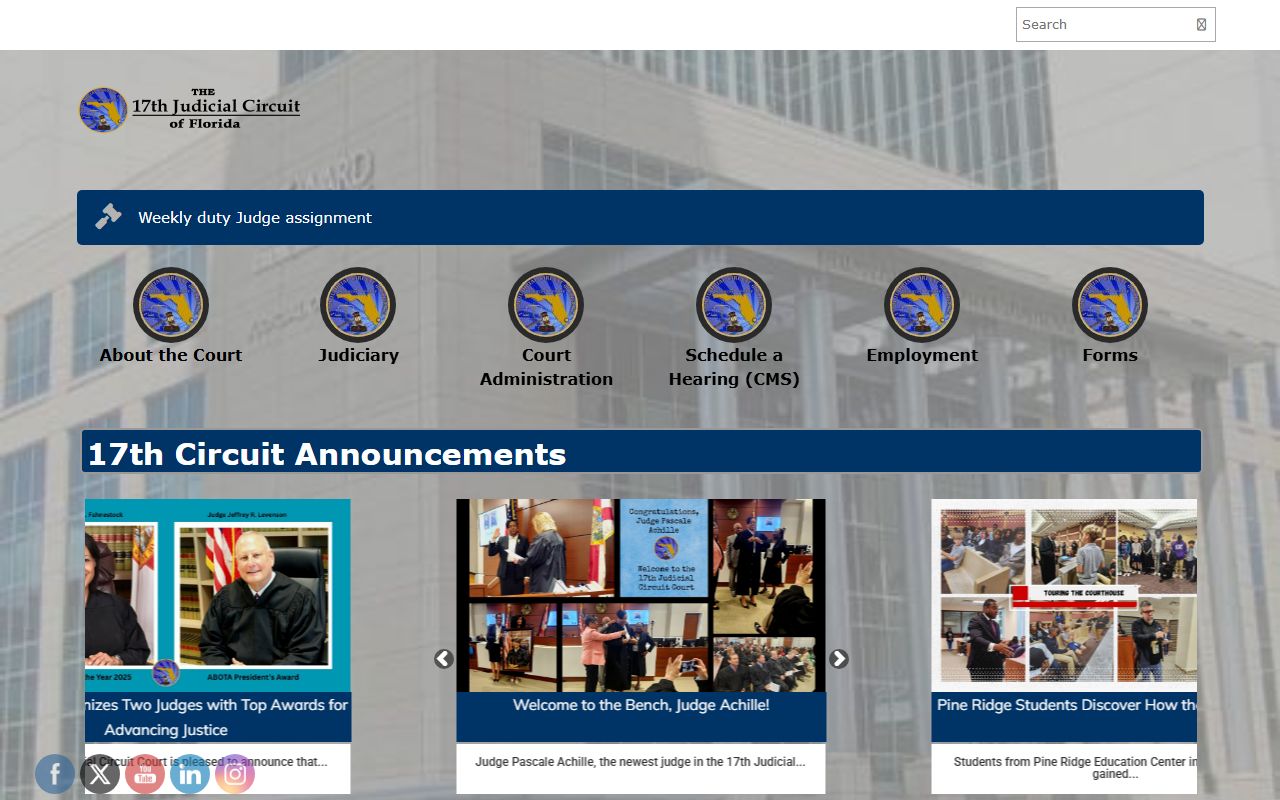
The 17th Judicial Circuit Court website at 17th.flcourts.org covers Broward County court operations, including the probate division that handles all Plantation estate matters.
The Broward County Clerk of Courts at browardclerk.org is where Plantation probate cases are filed and searched, with a public online records portal available at no cost.
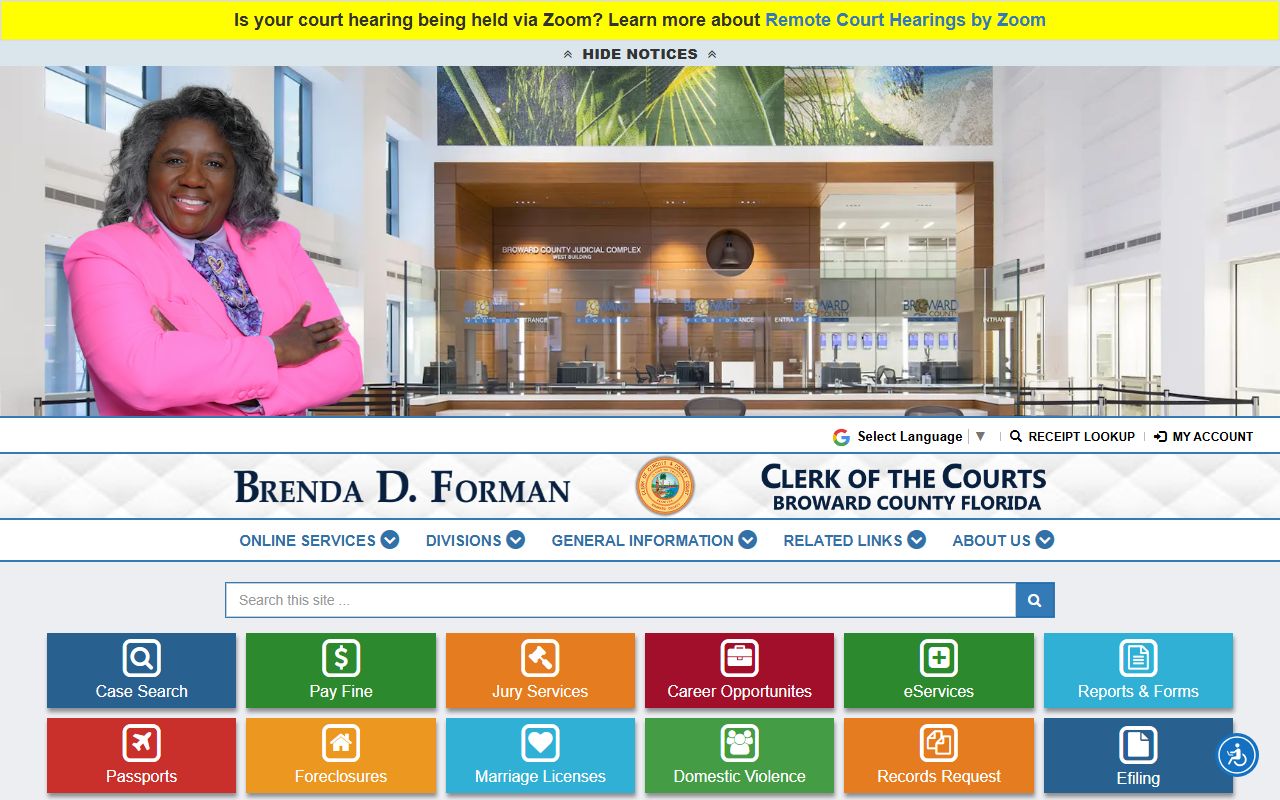
The clerk's site is the main access point for all Plantation estate records, from initial filings through final judgment and estate closing documents.