
Access Broward County Probate Court Records
Broward County probate court records are filed and maintained by the Broward County Clerk of Courts in Fort Lauderdale, covering estate administration cases, summary administration petitions, will deposits, guardianship matters, and all related probate proceedings for residents of one of Florida's most populous counties. The 17th Judicial Circuit covers Broward County exclusively, and the probate division manages a large volume of cases given the county's nearly two million residents. This page covers how to find records, what types of probate are available, and where to get help navigating the process.
Broward County Quick Facts
Broward County Clerk of Courts - Probate Division
Clerk Brenda D. Forman oversees the Broward County Clerk of Courts, one of the busiest clerk offices in Florida. The main courthouse is in Fort Lauderdale, where all probate cases for the county are filed. Broward is the second most populous county in Florida, and its probate caseload reflects that size.
| Clerk of Courts | Brenda D. Forman |
|---|---|
| Address | 201 Southeast 6th Street, Fort Lauderdale, FL 33301 |
| Phone | (954) 831-6565 |
| Clerk Website | browardclerk.org |
| Judicial Circuit | 17th Judicial Circuit |
The 17th Judicial Circuit covers Broward County only, which means all circuit court resources including probate judges serve Broward County cases exclusively. This dedicated structure can be an advantage for people dealing with complex estates, as the probate division handles a large and diverse caseload with established procedures.
Probate in Broward County must be filed in the county where the decedent was a legal resident at the time of death. If a person lived in Fort Lauderdale, Pembroke Pines, Hollywood, or any other Broward city, their estate case belongs in this court. For estates involving assets in multiple counties, the probate case still opens where the decedent lived, even if property is located elsewhere in Florida.
The Broward County Clerk's homepage provides access to court divisions, case search tools, and contact information for all departments including probate. Start here when you need to find an existing case or get directions to the right division.
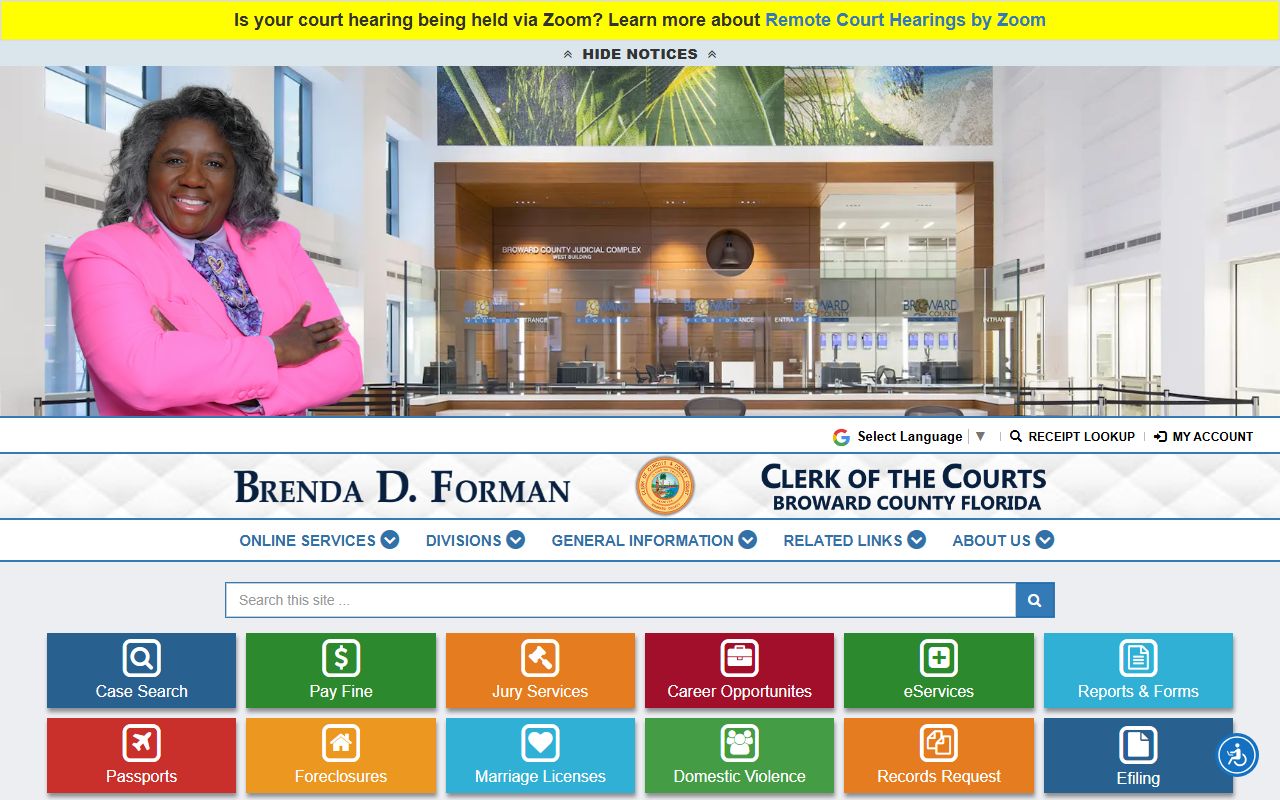
The homepage links directly to the online case search system, which allows public searches by name, case number, and other identifiers for probate and other civil cases.
Types of Probate in Broward County
Florida law provides three main options for settling an estate. Broward County courts handle all three. Which type applies depends on estate size, asset types, and time elapsed since death.
Formal Administration
Formal Administration is the full probate process and is required when the gross estate exceeds $75,000 and death occurred within the past two years. Chapter 733 of the Florida Statutes governs this process from start to finish. The court appoints a personal representative, who then has legal authority to manage and settle the estate. Duties include identifying and inventorying all assets, notifying creditors and paying valid claims, filing any required tax returns, and then distributing what remains to heirs under the will or under Florida's intestacy laws in Chapter 732 if there is no valid will.
Broward County real estate owned solely in the decedent's name requires a court order before ownership can transfer. Banks, title companies, and financial institutions need the letters of administration issued by the Broward County probate court to release funds or process title changes. Given the high cost of South Florida real estate, many Broward County estates that involve a home will go through Formal Administration even if other assets are modest.
The mandatory creditor notification period under Chapter 733 means Formal Administration takes at least several months. Simple estates with no disputes might close in four to six months. Contested estates or those with complex asset situations can take significantly longer.
Summary Administration
Summary Administration is the faster, lower-cost option. It applies when the estate's net value is $75,000 or less, or when the decedent has been deceased for two or more years. Chapter 735 governs this procedure. No personal representative is appointed. A petition is filed and the court issues an Order of Summary Administration directing how assets are distributed. For Broward County estates that qualify, this can be a much quicker path to settling affairs and distributing assets to heirs.
The two-year rule is particularly relevant in Broward County, where many retirees may have been residents for many years. If a person died two or more years ago and no probate was ever opened, Summary Administration may now be the right path regardless of estate size.
Disposition Without Administration
This is the most limited option and works only in narrow cases. There must be no real property, the estate consists only of personal property, and the total value cannot exceed the cost of the decedent's last illness and funeral expenses, capped at $6,000. The filing must happen within two years of death. The Broward County Clerk reviews the application, and if approved, issues a letter directing the asset holder to release funds to the person who paid those expenses. This is governed by Chapter 735.
Searching Broward County Probate Records
Broward County probate records are public court records. The Broward County Clerk maintains an online case search portal at browardclerk.org. You can search by the decedent's name, case number, or filing date. The portal shows case status, document filing history, and upcoming hearing dates.
For certified copies, documents not available online, or records from older cases, contact the clerk's office at (954) 831-6565 or visit in person at 201 Southeast 6th Street in Fort Lauderdale. Bring a photo ID and the name of the decedent or case number. Per-page copy fees apply and are set by Florida law. Staff can help locate specific documents within a case file but cannot provide legal advice.
Given the volume of cases handled by the Broward County Clerk, calling ahead or using the online portal before visiting in person is a good way to confirm what you need and reduce wait time at the courthouse.
The 17th Judicial Circuit serves Broward County exclusively, concentrating probate court resources on one of Florida's most active counties. Review the circuit's website for information on probate procedures, local court rules, and judge assignments.
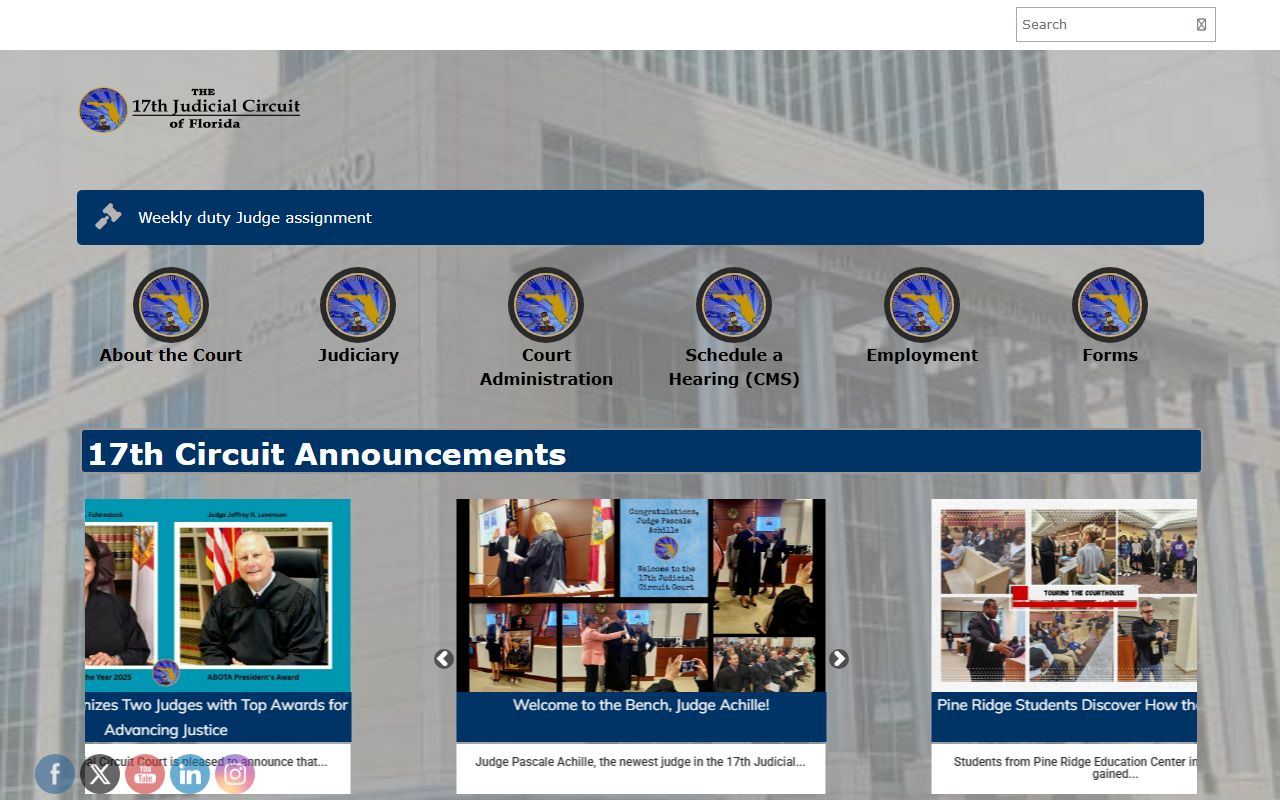
The 17th Circuit site provides administrative orders, local rules, and procedural information that supplements Florida's statewide probate statutes for cases filed in Broward County.
Florida Probate Law for Broward County Estates
All Broward County probate cases follow Florida's statewide probate code. Chapter 731 covers general provisions and definitions. Chapter 732 governs wills and what happens when someone dies without one. Chapter 733 covers estate administration, and Chapter 735 covers small estates including Summary Administration. Chapter 744 governs guardianship, which is filed through the same probate division.
Florida law requires that anyone with a will in their possession after a person dies must file it with the clerk of the circuit court in the decedent's home county within 10 days of learning of the death. In Broward County, that means filing with the Broward County Clerk's office in Fort Lauderdale. This is a legal obligation under Chapter 732 and applies regardless of whether a probate case is ever opened.
The Florida Clerks Find a Clerk tool confirms jurisdiction details and provides current contact information for all Florida county clerks. Use it to verify you are filing in the correct county, especially for decedents who split time between counties.
The Florida Clerks statewide directory and Find a Clerk tool provide contact details and online portal links for all 67 Florida counties, including Broward, in one searchable resource.

Use the Find a Clerk tool to confirm jurisdiction and access the Broward County Clerk's direct portal links when you need to start a records search or locate filing instructions.
Legal Help and Self-Help Resources
The Florida Courts Self-Help Center provides approved forms and step-by-step guides for people handling their own probate cases. This is most practical for simple estates using Summary Administration or Disposition Without Administration. Broward County's large retiree population means the court system processes a high volume of smaller estate cases where self-help resources can be adequate.
For complex estates, which are common in Broward County given high property values and diverse asset types, working with a probate attorney is generally the safer approach. The Broward County Bar Association can provide referrals to attorneys who practice in the 17th Circuit. Legal Aid Service of Broward County provides free civil legal help to qualifying low-income residents, including assistance with probate matters. The Florida Courts website has general probate information that applies statewide, and the Florida Association of Court Clerks has resources on working with clerk offices across Florida.
Guardianship cases in Broward County, governed by Chapter 744, go through the same probate division. If you need to petition for guardianship of an incapacitated adult or a minor with assets, file with the Broward County Clerk's probate division at the Fort Lauderdale courthouse.
Cities in Broward County
Broward County is home to numerous substantial cities and municipalities. The following qualifying cities have dedicated pages on this site.
Other Broward County communities include Dania Beach, Hallandale Beach, Coconut Creek, Margate, North Lauderdale, Oakland Park, Weston, Wilton Manors, and Lighthouse Point. Residents of all Broward County communities file probate cases at the Broward County Clerk's office in Fort Lauderdale.
Nearby Counties
Broward County is bordered by Miami-Dade County to the south and Palm Beach County to the north. Probate must be filed in the county where the decedent was a legal resident, so confirm residency before opening a case, especially for people who divided their time between Broward and a neighboring county.