
Tallahassee Probate Court Records Lookup
Probate court records for Tallahassee residents are filed with the Leon County Clerk of the Circuit Court at the Leon County Courthouse on Monroe Street, just a few blocks from the Florida State Capitol. Tallahassee is both the state capital and the Leon County seat, which means the probate court, county clerk, and state legislature are all within a short distance of each other. When a Tallahassee resident dies and their estate goes through probate, the case is handled by the 2nd Judicial Circuit under the oversight of the Leon County clerk's office, which maintains all case files and accepts public record requests.
Tallahassee Quick Facts
Leon County Clerk Handles Tallahassee Probate
All probate cases for Tallahassee residents go through the Leon County Clerk of the Circuit Court. The courthouse where you file and pick up records is the Leon County Courthouse at 301 S Monroe St, in the heart of downtown Tallahassee. The clerk maintains all case files and is the primary contact point for anyone who needs to file an estate case or search existing records.
The 2nd Judicial Circuit covers six counties: Franklin, Gadsden, Jefferson, Leon, Liberty, and Wakulla. Leon County, where Tallahassee sits, is by far the most populated county in the circuit and handles the bulk of the circuit's probate caseload. Circuit judges assigned to the probate division oversee cases and rule on any contested matters that come up during estate administration.
| Clerk of Court | Gwen Marshall |
|---|---|
| Address | 301 S Monroe St, Tallahassee, FL 32301 |
| Phone | (850) 606-4021 |
| Website | www.leoncourtclerk.gov |
| Hours | Monday - Friday, 8:00 AM to 5:00 PM |
For more on county-level probate procedures in Leon County, visit the Leon County probate records page.
The City of Tallahassee's official website covers city services and local government but does not handle probate matters.
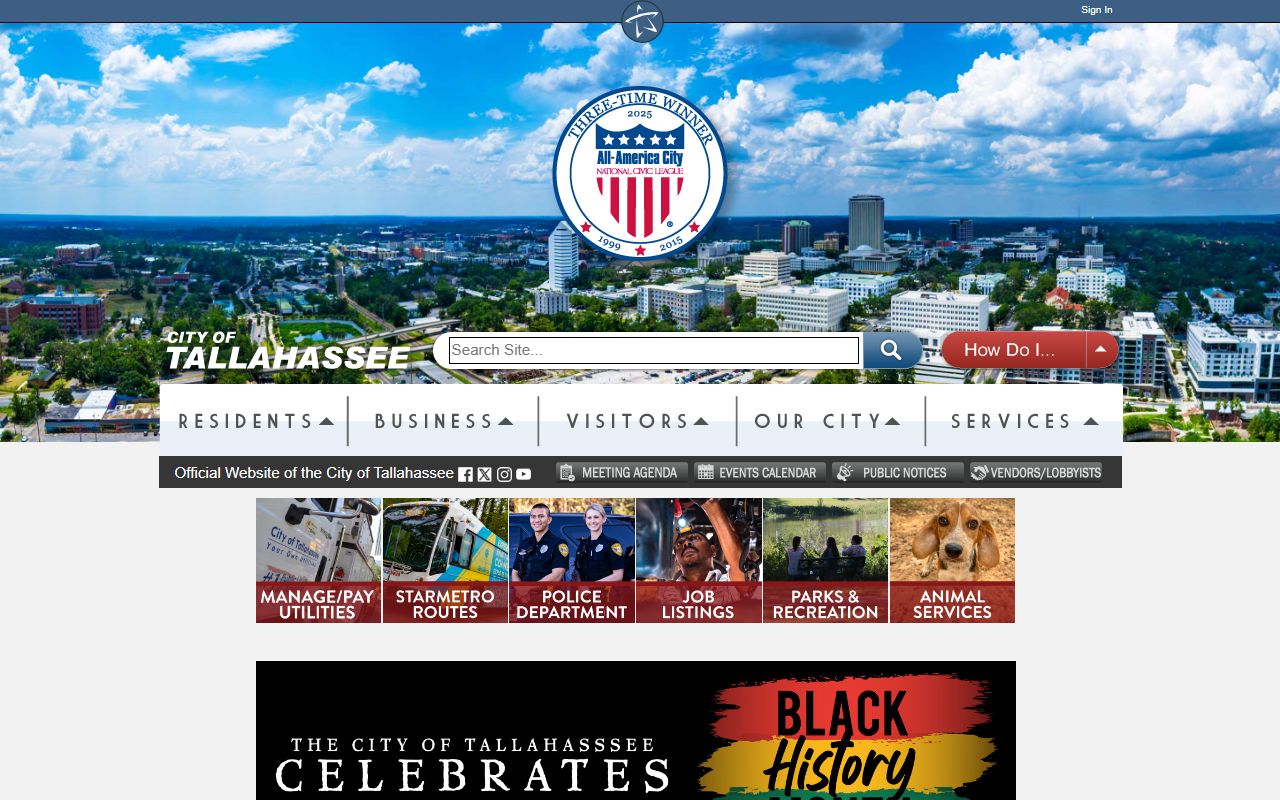
City hall manages utilities, permits, and other local services. Probate cases go to the clerk's office at the Leon County Courthouse, not to city government.
How to Search Tallahassee Probate Records
The Leon County Clerk provides online case search through its website at leoncourtclerk.gov. You can search probate cases by the name of the deceased, by the personal representative's name, or by case number. Many case documents are available to view online at no charge. The portal shows case dockets, filed documents, and hearing dates, making it a useful first stop for anyone researching a Tallahassee estate.
In-person searches are available at the courthouse at 301 S Monroe St. Staff at the clerk's counter can help locate files. Bring the name of the deceased and an approximate year of death. You can review documents at the counter and request copies. Copies are made on-site and you pay for them at the time of your request.
Mail requests are also an option. Write to the clerk's office, identify the case you need, and include payment for the estimated copy cost. The clerk will respond with documents or contact you if more information or payment is needed. Processing times for mail requests can be several weeks.
Some documents are not open to public view. Florida law makes inventories and accountings filed in probate cases confidential. You can see that they were filed, but the financial content is not public. Everything else on the docket, including the petition, orders, and final judgment, is generally available.
Probate Case Types in Leon County
Florida gives families three ways to settle an estate. The right choice depends on the estate's value and how long ago the person died.
Formal Administration is required when the estate is worth more than $75,000, or when the person died less than two years ago and the smaller-estate options aren't available. The court appoints a personal representative, who then notifies creditors, collects assets, pays debts, and distributes the remainder to heirs. An attorney is required in most formal cases. The timeline is at least six months but often runs longer, especially in contested cases or estates with real property that needs to be sold.
Summary Administration is for estates at or below $75,000, or for any estate where the person has been dead for more than two years. This process skips the personal representative appointment. The court reviews the petition and issues an order of summary administration directing distribution of the assets. It's faster and cheaper. Some attorneys handle summary cases on a flat fee, which helps keep costs predictable.
Disposition Without Administration is the most basic option. It applies only when the estate has no real property, the only funds are to cover funeral and final medical expenses, and the total is under $6,000. The clerk handles this without a judge. It's a good option for very small estates where the goal is simply to reimburse someone who paid for the funeral.
Tallahassee has a large population of state employees, university staff, and retirees. Many have pensions, retirement accounts, and homes. Assets held in living trusts or with named beneficiaries pass outside of probate and won't show up in the clerk's records at all. The probate estate may be much smaller than the person's total wealth.
Fees for Probate Cases in Leon County
Florida sets baseline probate filing fees by statute, and Leon County adds local court costs. For formal administration, the initial filing fee is around $400 in most cases. Larger estates, especially those over $1 million, pay on a higher fee tier set by state law.
Summary administration filing fees are lower. Expect to pay in the $200 to $300 range, though the exact amount varies based on estate specifics and any local administrative costs. Disposition without administration has the lowest fees, often under $100.
Copies of court documents cost $1.00 per page for plain copies. Certified copies cost $2.00 per page plus a $2.00 certification fee per document. If you need certified copies for banks, transfer agents, or real estate transactions, plan for several copies and budget accordingly.
Formal administration cases may also involve costs for a creditor notice publication in a local newspaper, bond premiums if the court requires a bond, and attorney fees. Florida's probate statute sets a fee schedule for attorneys based on estate value, though parties can agree to other arrangements in writing.
Legal Resources in Tallahassee
North Florida Legal Services provides free civil legal help to income-eligible residents of Leon County. They handle a range of civil matters including probate, and Tallahassee residents can contact them directly to see if they qualify for assistance. Having legal help can make a real difference in a complex estate.
The Florida Bar Lawyer Referral Service can connect you with a licensed probate attorney in the Tallahassee area. Because Tallahassee is home to Florida State University and Florida A&M University's law schools, there is a solid concentration of legal professionals in the city, including those who specialize in probate and estate planning.
The Leon County Courthouse has resources for self-represented parties, including forms and procedural information from clerk's office staff. They can't give legal advice, but they can explain what documents are needed to open a case and how the process works at a basic level. The Florida Bar also publishes free consumer guides on probate, available on the Bar's website.
Because Tallahassee is the state capital, the Florida Legislature's website has full text of the Florida Probate Code, which you can read directly. Knowing the relevant statutes helps when you're trying to understand your rights and options during the probate process.
Florida Probate Law Fundamentals
The Florida Probate Code spans Chapters 731 through 735 of the Florida Statutes. These chapters define key terms, set out the roles of personal representatives and heirs, establish how creditors get paid, and govern how disputes are resolved in circuit court.
A key rule that applies right after death: anyone who has custody of a will must deposit it with the county clerk within 10 days of learning the person has died. This applies even if no probate case will be opened. The will becomes a public record once deposited with the clerk. The rule is in Florida Statutes section 732.901.
In formal administration, creditors must be notified. The personal representative publishes a notice to creditors in a local newspaper for two consecutive weeks. Creditors then have 90 days from the first publication to file claims. Once that period ends, valid claims are paid and the rest of the estate goes to the beneficiaries. The court reviews the final accounting and approves the distribution order before the case closes.
If there is no will, Florida's intestacy statutes determine who inherits. Spouses, children, and other relatives take priority in a defined order. The probate court applies these rules and makes sure assets go to the right people. The entire process, from filing to final order, becomes part of the permanent public record at the Leon County Courthouse.