
Find Probate Court Records in Franklin County
Franklin County probate court records include estate cases, wills on file with the court, guardianship proceedings, and related filings handled by the Clerk of Courts in Apalachicola, a small but active courthouse in Florida's Panhandle. This guide covers how to find those records, what the different types of probate look like, and where to turn for help.
Franklin County Quick Facts
Franklin County Clerk of Courts
The Franklin County Clerk of Courts in Apalachicola handles all probate filings for the county. The office is small, serving one of Florida's least populous counties, but it maintains complete records for every probate case opened in Franklin County. Staff can look up cases and pull files during regular business hours.
The clerk receives petitions, letters testamentary, inventories, accountings, and final orders throughout the probate process. Probate records are public in Florida. Anyone can request access to a case file. The clerk cannot give legal advice, but staff can tell you what records exist and how to request copies.
| Clerk of Court | Franklin County Clerk of Courts |
|---|---|
| Address | 33 Market Street, Suite 203, Apalachicola, FL 32320 |
| Phone | (850) 653-8861 |
| Website | flclerks.com/page/findaclerk |
| Hours | Monday - Friday, 8:00 AM to 5:00 PM |
Franklin County is a smaller county, and online case search tools may be more limited than in larger counties. Calling ahead at (850) 653-8861 is a smart first step to confirm what search options are available and what you need to bring if you plan to visit in person.
The Florida Clerks of Court directory links to every county clerk in Florida and is shown below. For Franklin County, this is a reliable way to confirm current contact information and verify the clerk's website link.

The statewide clerk directory shown above is maintained by the Florida Association of Court Clerks and Comptrollers. It lists all 67 Florida county clerks with links, addresses, and phone numbers, and it is updated when contact information changes.
How to Search Franklin County Probate Records
Because Franklin County is small, in-person access is often the most reliable option for finding probate records. The office is at 33 Market Street, Suite 203, in Apalachicola. Staff can pull case files and confirm whether a probate estate was opened for a specific person.
Call (850) 653-8861 before you visit to confirm office hours and whether online search tools are available. In smaller counties, online search portals may not cover all records, particularly older filings. A phone call takes a few minutes and saves you a wasted trip.
If you need certified copies of probate documents, ask the clerk about fees when you call. Certified copies are typically needed for tasks like clearing a deed or dealing with a bank after someone dies. Bring a valid photo ID when you visit the office.
The Florida Courts self-help information page has general probate guidance and links to standard forms. Even if you plan to work with an attorney, reviewing this material first can help you understand the basic steps in the process.
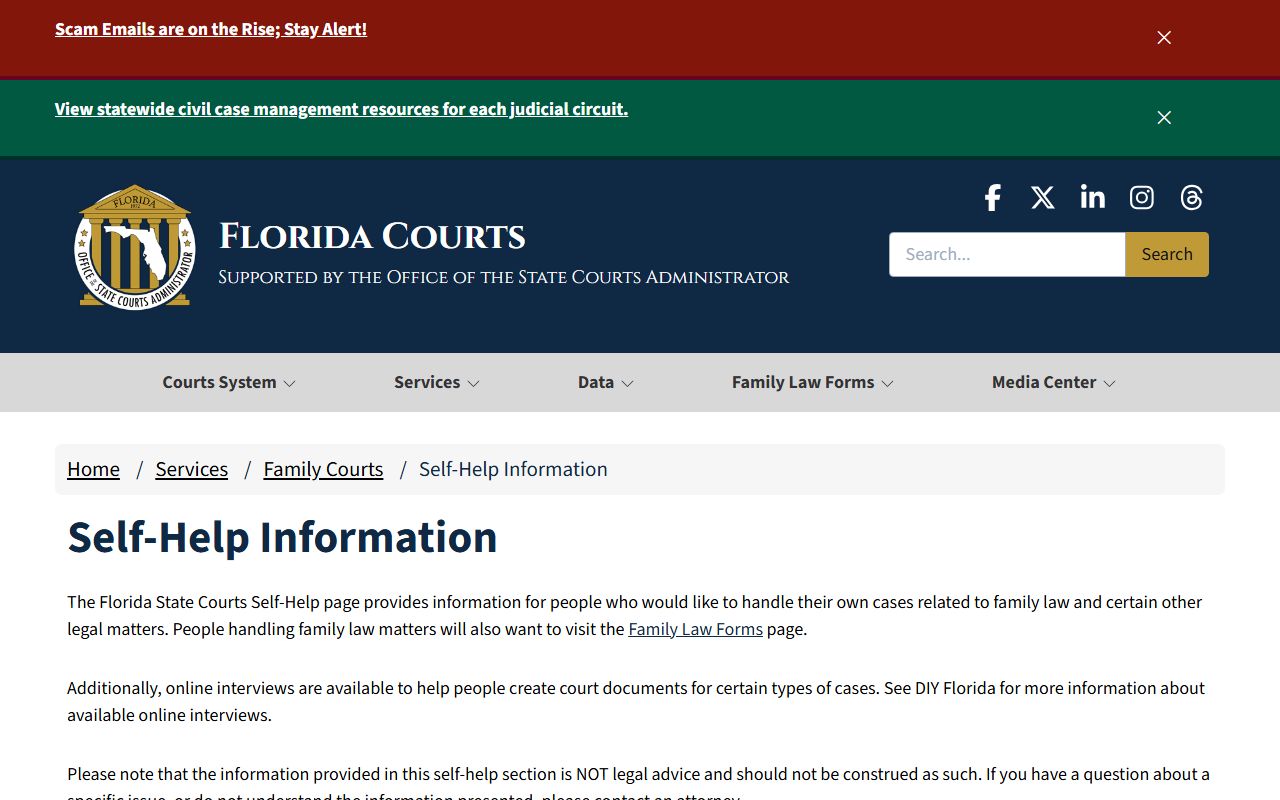
The self-help page shown above is maintained by the Florida Office of the State Courts Administrator. It is free to use and covers the basic process for estate administration under Florida law, including which forms apply to different types of probate.
For probate records in other Florida counties, the Florida Clerks directory gives you direct links and contact details for each county's clerk of courts.
Types of Probate in Franklin County
Florida law provides three paths for handling a decedent's estate. Franklin County uses the same framework as the rest of Florida, with cases handled through the 2nd Judicial Circuit Court. The right process depends on the size of the estate and how long ago the person died.
Formal Administration
Formal administration applies when non-exempt estate assets exceed $75,000. This is the full probate process under Florida Statutes Chapter 733. The court appoints a personal representative to manage the estate, notify creditors, pay valid debts, and distribute assets to beneficiaries. A licensed Florida attorney must represent the personal representative throughout the process. The minimum timeline is around six months, and complex cases can take considerably longer.
In Franklin County, where property values near Apalachicola and the coast can be significant, formal administration is not uncommon even for estates that might seem modest in other ways. Coastal real property often pushes estates above the $75,000 threshold. Every filing made during formal administration becomes part of the public record at the clerk's office.
Summary Administration
Summary administration under Florida Statutes Chapter 735 is available when non-exempt assets are $75,000 or less, or when the decedent has been dead for more than two years. No personal representative is appointed. Beneficiaries petition the court directly. The court issues an order of summary administration, and assets pass to the people named in that order. This process is faster and cheaper than formal administration and is commonly used for smaller estates.
Disposition Without Administration
Disposition without administration is the simplest option. It is available when there is no real property in the estate and non-exempt personal property does not exceed the total of final expenses like medical and funeral bills. The general limit on non-exempt personal property is around $6,000. A surviving family member files a petition with the clerk. No hearing is needed in most cases. This process is governed by Chapter 735 and can often be completed within weeks.
The 2nd Judicial Circuit Court
Franklin County is part of Florida's 2nd Judicial Circuit, which covers six counties: Franklin, Gadsden, Jefferson, Leon, Liberty, and Wakulla. The circuit court with primary jurisdiction is headquartered in Tallahassee, the state capital. The 2nd Judicial Circuit Court website lists judges, court divisions, and local administrative orders affecting probate practice in the circuit.
Administrative orders from the 2nd Circuit can change filing requirements, form preferences, or scheduling procedures. Check current local rules before submitting anything. The clerk's office at (850) 653-8861 can confirm what is currently required for probate filings in Franklin County.
The Florida Courts statewide website has the approved standard forms for Florida probate cases. Many of these forms are available to download at no cost. They are the same forms used in Franklin County courts.
Legal Resources for Franklin County Probate
Finding legal help in Franklin County is more challenging than in larger metro areas, but options exist. The Florida Courts self-help page is a good free resource for understanding basic probate procedures. For low-income residents, legal aid organizations serving North Florida may be able to help with simple probate matters.
The Florida Bar Lawyer Referral Service connects you with a licensed attorney in your area. While Franklin County itself has a small local bar, attorneys from the Tallahassee area commonly handle probate cases for Panhandle counties including Franklin. An initial consultation is often available at a reduced rate.
Florida's probate statutes are available free online. Chapter 733 covers formal estate administration. Chapter 735 covers summary administration and disposition without administration. Reading these sections before you speak with an attorney will help you ask better questions and understand your options.
Cities in Franklin County
Franklin County is sparsely populated. The main communities are Apalachicola, the county seat, along with Carrabelle and Eastpoint. None of these communities exceed 100,000 residents, so none qualify for a dedicated city records page on this site. All probate cases for residents across Franklin County are filed with the clerk's office at 33 Market Street in Apalachicola.
Nearby Counties
Franklin County is located along Florida's Panhandle coast. Nearby counties in the 2nd Judicial Circuit and surrounding area each have their own clerk of courts. If an estate includes property in multiple counties, separate probate proceedings may be needed in each.