
Search Hillsborough County Probate Court Records
Hillsborough County probate court records are filed and managed by the Clerk of Circuit Court in Tampa, one of Florida's largest probate divisions, handling all estate cases, wills, trusts, and guardianship matters under the 13th Judicial Circuit. This page explains how to search those records, what the three probate tracks require, how to reach the clerk's office, and what legal resources are available in Hillsborough County.
Hillsborough County Quick Facts
Hillsborough County Clerk of Court
The Hillsborough County Clerk of Circuit Court is one of the busiest in Florida. The clerk handles all probate filings for the county, maintains the complete record of every estate and guardianship case, issues letters of administration, and provides certified copies of all filed documents. Tampa is home to the main courthouse, and probate filings are processed through the clerk's civil and probate division.
| Clerk of Court | Hillsborough County Clerk of Circuit Court |
|---|---|
| Address | Hillsborough County Courthouse, Tampa, FL (main probate division, call to confirm room) |
| Phone | (813) 276-8100 |
| Website | hillsclerk.com |
| Hours | Monday - Friday, 8:00 AM to 5:00 PM |
Hillsborough County is the sole county in the 13th Judicial Circuit. The circuit court website at jud13.flcourts.org has local probate rules, administrative orders, judge assignments for the probate division, and required forms that are specific to the 13th Circuit. These local rules can differ from the statewide Florida Probate Rules, so review them before filing anything in Tampa.
The Florida Clerks statewide directory can confirm clerk contact details and links for Hillsborough County if you need to verify the most current information.
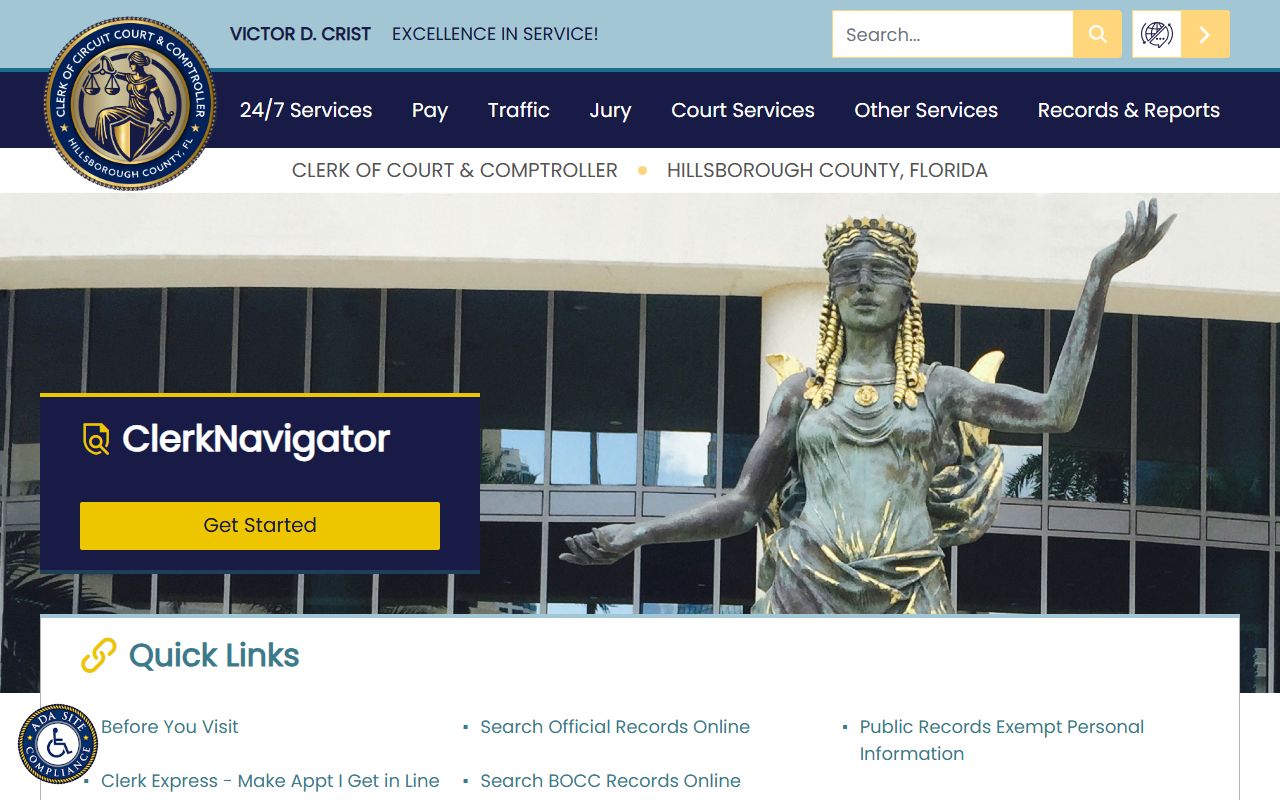
The Hillsborough County Clerk's website at hillsclerk.com provides online case search, e-filing access, and probate division information directly from the official clerk portal.

The Florida Clerks statewide directory gives you verified contact details for the Hillsborough County clerk and all other Florida county clerks.

The Florida Court Clerks and Comptrollers website provides statewide resources, news, and links to the official clerk portals for all 67 Florida counties including Hillsborough.
How to Search Hillsborough County Probate Records
Hillsborough County has one of the most accessible public records systems in Florida. Here are your options for searching probate case records.
Online: The Hillsborough County Clerk's website offers online case search and public access to court records. Go to the case search section and enter the decedent's name. You can view docket entries, check case status, and in many cases see scanned documents without visiting the courthouse. This is the fastest way to find out whether probate was filed and what the current status is.
In person: Visit the Tampa courthouse probate division. Call (813) 276-8100 ahead of time to confirm the room and any specific procedures for the probate window. Hillsborough County is a large, busy court. Knowing where to go before you arrive saves time. Staff can pull the full case file and make copies for you. Certified copies cost more than uncertified ones; ask about the current fee schedule.
By phone: Call (813) 276-8100 to check case status, confirm whether probate was opened, or ask about fees and procedures. Expect wait times during busy periods. Staff can give you basic case info but will not give legal advice.
Mail: Written requests for copies can be sent to the clerk. Include the decedent's name, case number if known, your return address, and a check or money order for the estimated fee. Call first to verify the current fee per page.
Florida Chapter 733 governs formal administration. Chapter 735 governs summary administration and disposition without administration. Knowing which applies to the estate you are researching tells you what documents to expect in the file.
Types of Probate in Hillsborough County
Florida provides three probate tracks. Hillsborough County courts handle all three. The applicable track depends on the estate's value and how long the decedent has been gone.
Formal Administration
Formal administration is required when the non-exempt estate exceeds $75,000. This is the full court-supervised process under Chapter 733. The 13th Circuit appoints a personal representative who must inventory assets, publish notice to creditors in a newspaper of general circulation in Hillsborough County, give written notice to all known creditors, wait 90 days from first publication for claims, resolve every valid claim, prepare a final accounting, and get a court order closing the estate. This process takes at minimum six months, and Tampa's busy probate docket means scheduling can add time. Florida requires a licensed attorney to represent most estate personal representatives in formal administration.
Summary Administration
When the non-exempt estate assets are $75,000 or less, or the decedent has been dead for two or more years, the family can use summary administration under Chapter 735. No personal representative is appointed. The petitioners file directly with the Hillsborough County clerk. The court enters a single order of summary administration that distributes assets to named beneficiaries. This can be completed in weeks rather than months, though it still requires notice to known creditors. If a creditor objects, the court sets a hearing.
Disposition Without Administration
This is available when the decedent left no real property and all non-exempt personal property has a total value of $6,000 or less. It is mainly used to reimburse whoever paid the decedent's final medical or funeral bills. No personal representative is appointed. In many cases the clerk's office can process this without a formal court hearing. Hillsborough County's large clerk staff handles these regularly. It is the fastest and least expensive option when the facts match the statute's requirements.
What Hillsborough County Probate Records Contain
Probate files in Hillsborough County are public court records. Most documents in the file are accessible to any member of the public. Here is what you will typically find.
Every probate file starts with the petition. It identifies the decedent, lists known heirs or beneficiaries, describes the nature and approximate value of the estate, and states whether a will was left. If a will exists, the original is filed with the petition and admitted to probate by court order. Once admitted, the will is a public record. Anyone can get a certified copy of a probated will from the Hillsborough County clerk.
Later documents include the estate inventory, creditor claims, orders granting or denying claims, accountings (both interim and final), motions filed by any party, court orders at each stage, and the final order closing the estate and discharging the personal representative. Guardianship files also contain annual reports from the guardian, examining committee reports, and all orders affecting the ward's care and finances.
Letters of administration and letters of guardianship are official court documents that authorize the personal representative or guardian to act. Every bank, brokerage, and title company will ask for certified copies of these. Hillsborough County charges a per-page fee for certified copies. With a county this size, the clerk processes a high volume of these requests; calling ahead to confirm turnaround time is worth doing for time-sensitive matters.
Legal Help and Self-Help Resources
Hillsborough County has extensive legal resources, which makes sense for a county of 1.5 million people. Here is where to look for help.
The Florida Courts Self-Help Center provides free forms and step-by-step instructions for all three probate tracks. These are the standard Florida probate forms accepted by the Hillsborough County clerk. The 13th Circuit also maintains self-help resources through the Tampa courthouse; check the 13th Circuit website for any local self-help programs or workshops.
Bay Area Legal Services is the primary legal aid organization serving Hillsborough County residents who cannot afford an attorney. They handle some probate matters, particularly for low-income and elderly clients. Call them or check their website to see if your situation qualifies for free representation.
The Tampa Bay area has a large community of probate attorneys. The Hillsborough County Bar Association can provide referrals. For formal administration, contested wills, large or complex estates, or any guardianship matter, working with a licensed Florida probate attorney is the right move. The 13th Circuit's local rules are detailed, and the Tampa probate docket is active. A local attorney who regularly practices in the Hillsborough courthouse will navigate the system more efficiently than someone unfamiliar with the local procedures.
Key Florida Probate Statutes
Every probate case in Hillsborough County is governed by two main chapters of Florida law. Chapter 733 is the Florida Probate Code. It sets out who may serve as personal representative, how assets must be inventoried, how creditors are notified and paid, what the accounting must include, and when the court can grant a final discharge. Every step in formal administration runs through Chapter 733. Chapter 735 handles the two simplified tracks, summary administration and disposition without administration. For any Hillsborough County probate case, knowing which chapter applies tells you the timeline, the documents you must file, and what the court will expect from start to finish. The 13th Circuit also has local rules that add detail to these statewide statutes. Review both before filing.
Cities in Hillsborough County
Hillsborough County includes the city of Tampa, the county seat and Florida's third-largest city, with a dedicated city page for probate information. Other communities in Hillsborough County include Brandon, Riverview, Plant City, Temple Terrace, and Valrico. Wesley Chapel is in neighboring Pasco County. Clearwater is in Pinellas County. Probate cases for all Hillsborough County communities are filed at the Clerk of Court in Tampa regardless of which city or unincorporated area the decedent lived in.
Nearby Counties
Hillsborough County borders several large Tampa Bay area counties. If an estate includes property in a neighboring county, a separate ancillary probate filing will be needed in that county's court.