
Find Probate Court Records in Hialeah
Probate court records for Hialeah residents are filed with the Miami-Dade County Clerk of the Circuit Court, which operates the 11th Judicial Circuit's probate division at the Miami-Dade County Courthouse in downtown Miami. Hialeah is Florida's second-largest city by population and one of Miami-Dade County's major municipalities, but like all cities in the county, it has no independent probate court. Every estate case involving a Hialeah resident goes through the county clerk's system, which you can search online or visit in person at the courthouse on Flagler Street.
Hialeah Quick Facts
Miami-Dade County Clerk Handles Hialeah Probate
When a Hialeah resident dies, their estate enters the probate system in Miami-Dade County. The Miami-Dade County Clerk of the Circuit Court manages all filings, records, and court documents for probate cases in the 11th Judicial Circuit. The physical location for probate filings is the Miami-Dade County Courthouse in Miami, about 10 miles southeast of Hialeah's downtown area.
The probate division is in Room 238 of the courthouse. You go there to file paperwork in person, pay fees, or pick up documents. If you want to search records online, the clerk's website handles that without requiring a trip downtown. The clerk's staff can answer questions about filing requirements, but they do not give legal advice.
| Clerk of Court | Juan Fernandez-Barquin |
|---|---|
| Address | 73 W Flagler St, Miami, FL 33130 (Room 238) |
| Phone | (305) 275-1155 |
| Website | www.miami-dadeclerk.com |
| Hours | Monday - Friday, 8:00 AM to 5:00 PM |
For more background on how Miami-Dade County handles probate, see the Miami-Dade County probate records page.
The 11th Judicial Circuit Court's website provides information on the probate division, local administrative orders, and court calendars.
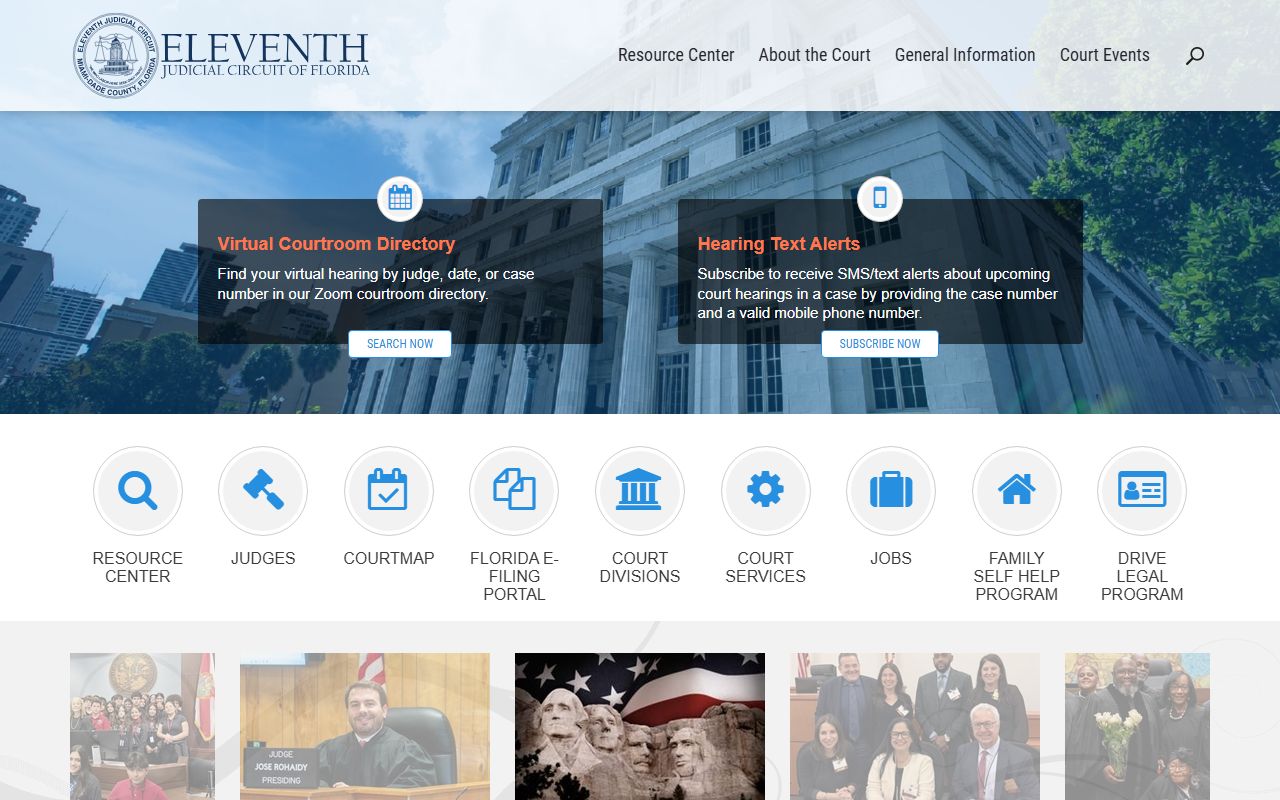
The 11th Circuit covers Miami-Dade County exclusively and handles one of the largest probate caseloads in Florida.
The city of Hialeah's official website covers local government services but does not handle probate matters.
The City of Hialeah's website is the right place for city permits, utilities, and local programs.
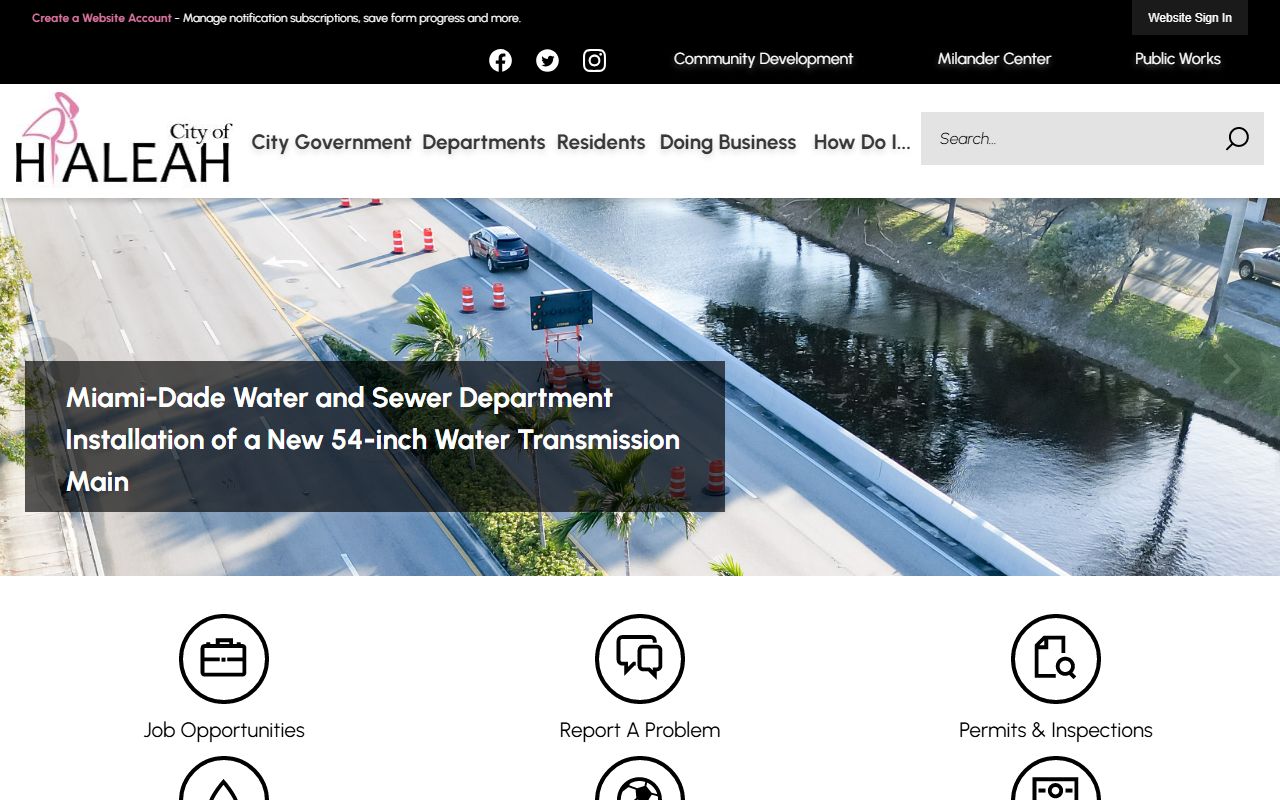
City hall handles municipal services only. Probate filings go to the county clerk in Miami.
The clerk's online portal is the fastest way to search existing probate records without visiting in person.
Miami-Dade County Clerk's online case search covers all probate filings in the 11th Circuit.
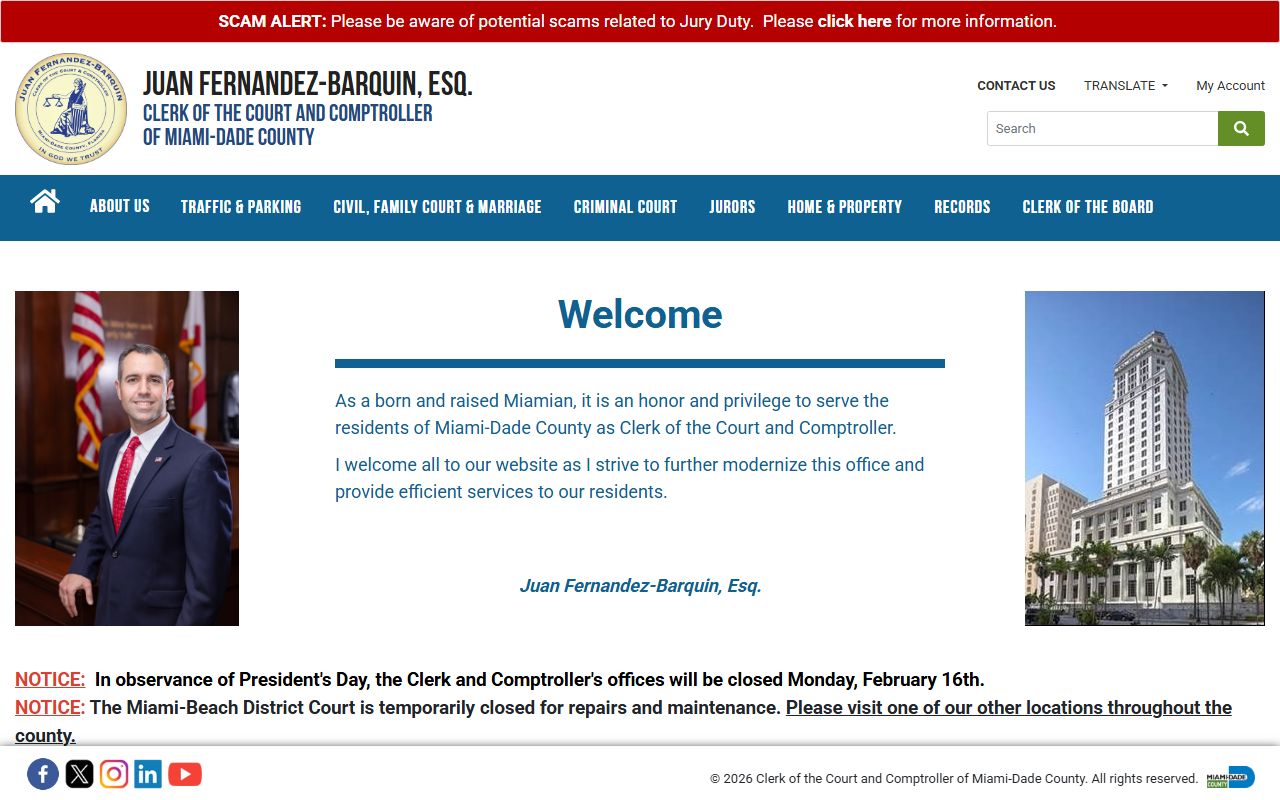
You can search by name, case number, or filing date and view most documents at no cost through the clerk's public portal.
How to Search Probate Records for Hialeah Estates
Miami-Dade County has one of the most accessible online court systems in Florida. The clerk's public portal at miami-dadeclerk.com lets you search probate cases by the name of the deceased, the case number, or the personal representative's name. Most filings are viewable online at no charge. You can pull up the docket, see what documents have been filed, and often view the actual documents as PDFs.
In-person searches happen at the courthouse at 73 W Flagler St in Miami. The probate division is in Room 238. If you can't find what you need online, a clerk at the counter can help you locate physical files and older records that may not be digitized. Come with the name of the deceased and the approximate year of death.
Mail requests work too. Write to the clerk at the Flagler Street address, identify the case you need, and include payment for estimated copy costs. The clerk will send documents or invoice you for any balance. Allow a few weeks for mail turnaround.
Keep in mind that inventories and accountings filed in probate cases are confidential under Florida law. You can see that these documents were filed, but the content is sealed. The case docket, petitions, orders, and final judgments are generally public.
Types of Probate Cases Filed in Miami-Dade
Florida offers three ways to handle an estate, and the choice depends mainly on the estate's value and how long the person has been deceased.
Formal Administration is the full probate process. It's used when the estate exceeds $75,000 or when the deceased died less than two years ago and doesn't qualify for a shortcut. The process involves petitioning the court, appointing a personal representative, notifying creditors, resolving claims, and distributing assets. An attorney is required in most formal administration cases. Expect the process to take at least six months, and often longer in contested cases or large estates.
Summary Administration is available for estates valued at $75,000 or less, or for any estate where the person died more than two years ago. It skips the personal representative appointment step. The court reviews the petition and issues an order directing how the assets should go to the people entitled to receive them. It's faster and cheaper than formal administration. Many attorneys handle summary administration for a flat fee.
Disposition Without Administration is the most basic option, reserved for estates with no real property, where the only funds are needed to cover funeral and final medical expenses, and where the total value is under $6,000. This is a clerk-level process with no judge required.
In a city like Hialeah with many homeowners and residents who have built up savings over decades, formal administration is common. But assets held in living trusts, retirement accounts with beneficiaries, and jointly titled property all pass outside of probate and don't appear in the clerk's records at all.
Probate Filing Fees in Miami-Dade County
Filing fees in Florida are set partly by state statute and partly by local administrative costs. For formal administration, initial filing fees typically run around $400, with additional fees tied to the estate's value. Estates worth over $1 million pay higher filing fees at set thresholds.
Summary administration filing costs less, generally in the range of $200 to $300. Disposition without administration has the lowest fees, often under $100.
Copy fees are $1.00 per page for plain copies and $2.00 per page plus a $2.00 certification charge for certified copies. Miami-Dade probate cases can involve large files, so copy costs for a complete file can be significant.
Personal representatives may also need to budget for publication costs (required for the creditor notice), bond premiums if the court requires a bond, and attorney fees. Florida's probate attorney fee schedule is set by statute based on the estate's value, though the parties can agree to other arrangements in writing.
Legal Help for Hialeah Residents
Legal Services of Greater Miami provides free civil legal help to income-eligible residents of Miami-Dade County, including assistance with probate matters. Call their office or visit their website to see if you qualify. They serve the Hialeah area along with the rest of the county.
Community Legal Services of Mid-Florida also has resources for residents who need help understanding the probate process. The Florida Bar Lawyer Referral Service can connect you with a licensed probate attorney in the area. Many attorneys serving Hialeah speak Spanish, which is helpful in a community where Spanish is widely spoken.
For those handling a case without an attorney, the Miami-Dade Clerk's office provides forms and basic procedural information. The Florida Bar publishes free consumer guides on probate that explain the process in plain language. These are available on the Florida Bar's website and cover the main steps, documents, and timelines you'll encounter.
Florida Probate Law Basics
Florida's probate rules come from the Florida Probate Code, which runs through Chapters 731 to 735 of the Florida Statutes. These chapters define who can be a personal representative, how creditors get notice, how heirs are identified when there's no will, and how disputes get resolved.
One requirement that applies immediately after death: anyone who has a will in their possession must deposit it with the county clerk within 10 days of learning of the death. This applies even if no probate case will be opened. The will becomes a permanent public record once it's filed. This rule is in Florida Statutes section 732.901.
Creditors have 90 days to file claims after the notice to creditors is published. Once that window passes and valid claims are paid, the personal representative can distribute remaining assets and close the estate. The circuit court reviews the final accounting and signs off before the case officially closes.
If someone dies without a will, Florida's intestacy laws determine who gets what. Spouses, children, and other relatives have priority in a set order defined by statute. The probate court applies these rules to make sure the right people receive the assets.