Access Doral Probate Court Records
Doral is in Miami-Dade County, so probate cases for Doral residents go through the Miami-Dade County Clerk of Courts under the 11th Judicial Circuit. This page covers where to file, how to search records, what types of probate exist, what fees apply, and where to find legal help in the Miami-Dade area.
Doral Quick Facts
- Population: 72,046
- County: Miami-Dade
- Judicial Circuit: 11th
- Formal Administration Threshold: $75,000
Which County Handles Probate for Doral
Doral is incorporated within Miami-Dade County, so all probate filings for Doral residents are handled by Miami-Dade County Circuit Court under the 11th Judicial Circuit. The Miami-Dade Clerk of Courts, Juan Fernandez-Barquin, maintains all estate records and handles probate intake for the county, which covers Doral along with dozens of other municipalities.
The main probate courthouse for Miami-Dade is the Miami-Dade County Courthouse at 73 W Flagler Street in downtown Miami. Doral is located on the western edge of Miami-Dade, so residents may find it easier to reach the courthouse via the Dolphin Expressway than from more distant parts of the county. There is no separate probate courthouse in Doral itself. All filings go to the downtown Miami location.
| Clerk of Court | Juan Fernandez-Barquin |
|---|---|
| Address | Miami-Dade County Courthouse, 73 W Flagler St, Miami, FL 33130 |
| Phone | (305) 275-1155 |
| Website | www.miami-dadeclerk.com |
| Hours | Monday - Friday, 8:00 AM to 5:00 PM |
The Miami-Dade probate division handles one of the largest volumes of estate cases in Florida. Wait times for hearings and court approvals can be longer here than in smaller counties. Plan ahead if you need court orders by a specific date, particularly for time-sensitive matters like clearing title to sell property.
Lead-in: The 11th Judicial Circuit's official site at www.jud11.flcourts.org covers local court rules, division assignments, and administrative orders for Miami-Dade probate cases.
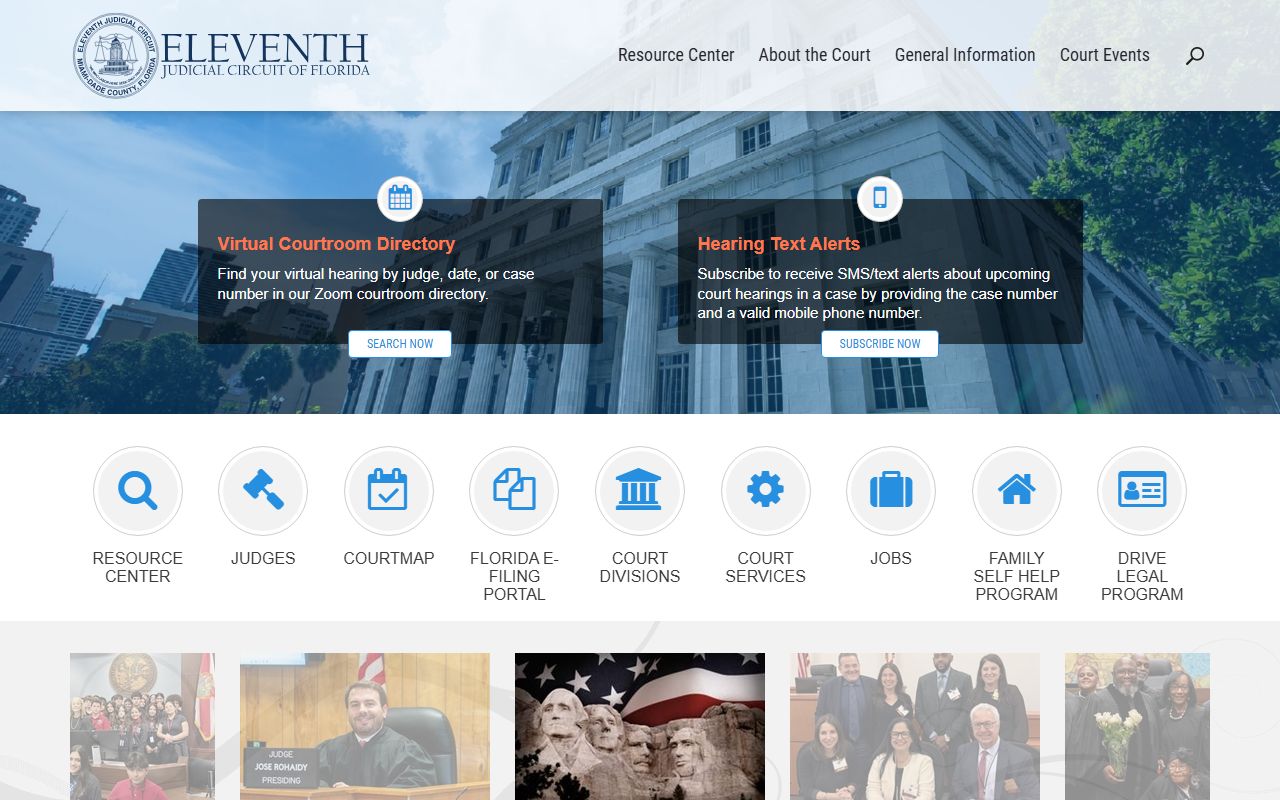
The 11th Circuit site has local administrative orders that supplement Florida's statewide probate rules. Attorneys and pro se filers alike should review these local orders before submitting petitions in Miami-Dade probate court.
How to Search Doral Probate Records
Probate records in Miami-Dade County are public with limited exceptions. Inventories and accountings filed in estate cases are confidential under Florida law. Other case documents, including petitions, orders, notices, and final decrees, are open to public inspection.
The Miami-Dade Clerk of Courts offers online case search through the portal at miami-dadeclerk.com. You can search by decedent name, case number, or attorney of record. The system covers recent years of filings. For older estates, you may need to contact the clerk's archives division or visit the courthouse directly.
In-person access to probate records is available at the Miami-Dade County Courthouse on Flagler Street during regular business hours. The probate division is located in the courthouse; check with the clerk's office when you arrive to find the right window or counter. Bring the full legal name of the deceased and the approximate year of death. Public access terminals are available for case lookups.
If you need certified copies of estate documents for banks, lenders, or title companies, the clerk charges a per-page fee plus a certification fee. Plain copies cost less. You can also submit written copy requests by mail with a check for the estimated fee. The clerk will send copies or contact you if additional payment is needed.
Lead-in: The Miami-Dade County Clerk's official site at www.miami-dadeclerk.com provides the case search portal, fee schedule, and e-filing information for all probate matters.
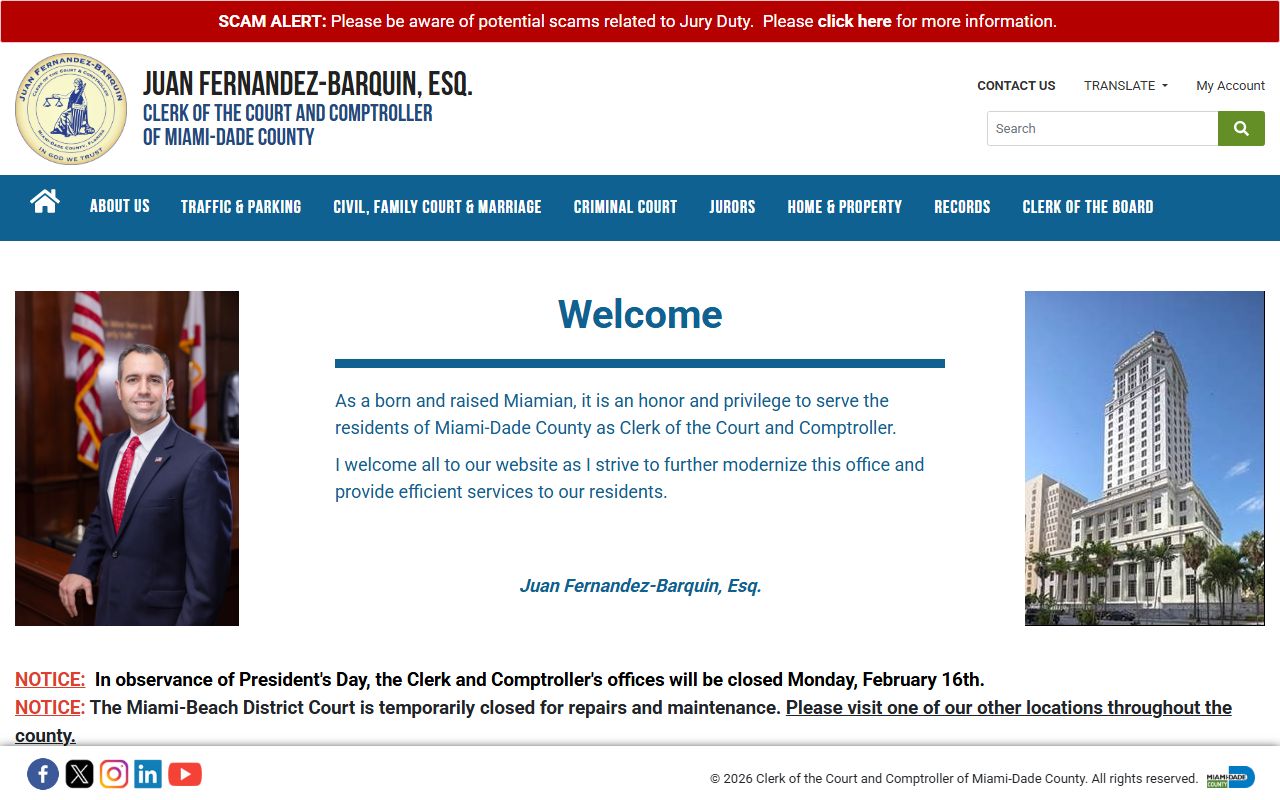
The clerk's site lists current fees, accepted payment types, filing guides, and contact information for specific courthouse divisions, all of which apply to Doral probate filings processed through the Miami-Dade system.
Types of Probate Cases in Miami-Dade County
Florida law provides three types of estate administration, and the right one for a Doral estate depends on the value of assets and timing.
Formal Administration is for estates with a gross value over $75,000. It is the most comprehensive type of probate. The circuit court appoints a personal representative, creditors receive notice, an inventory of assets is filed, debts and taxes are paid, and a final accounting is submitted before the court discharges the personal representative. In Miami-Dade, expect Formal Administration to take at least six to twelve months for a straightforward case. Larger or contested estates take longer.
Summary Administration works when the estate is worth $75,000 or less, or when the decedent has been dead for two years or more regardless of the estate size. No personal representative is needed. The heirs file a petition listing assets and proposed distribution, and the court issues an order of summary administration. It is faster and less expensive, and for many Doral families dealing with smaller estates, it is the practical choice.
Disposition Without Administration applies in very limited cases: the estate has no real property, and the only assets are exempt personal property or money to cover funeral expenses and the decedent's medical costs in the last 60 days of life, with non-exempt assets generally under about $6,000. The clerk can authorize payment without a formal court proceeding.
Doral and Miami-Dade County also see a substantial number of ancillary probate cases. Many Doral residents have international ties, and some non-U.S. residents own property in the city. When a foreign national or out-of-state resident dies owning real property in Doral, an ancillary probate may be needed in Miami-Dade to clear title to that property, even if the primary estate is handled elsewhere.
Probate Filing Fees in Miami-Dade County
Miami-Dade probate filing fees follow the Florida statutory schedule. What you pay depends on the type of administration and the estate value.
For Formal Administration, the filing fee generally starts around $400 and scales up with the estate's reported gross value. Summary Administration carries a lower fee, typically around $235 to $280. Disposition Without Administration has the lowest filing cost. All fees are subject to change when the Florida Legislature updates the statutory schedule, so verify current amounts with the clerk before filing.
Additional costs in Miami-Dade probate cases include certified copy fees, publication costs for the Notice to Creditors, and potential fees for court hearings or special masters in complex cases. Miami-Dade's local administrative orders may impose additional procedural requirements that affect cost. Attorneys sometimes charge separately for filing fees, so ask your attorney to clarify what is included in their quoted fee.
Attorney fees for Florida probate are set by statute. For Formal Administration, the statutory starting rate is 3% of the first $1 million of the estate's compensable value. The personal representative is also entitled to a fee under statute. Parties can agree in writing to different arrangements, but the statutory schedule governs if no written agreement exists.
Legal Help for Doral Residents
Doral residents who need affordable legal help for probate matters have several options in the Miami-Dade area.
Legal Services of Greater Miami is the primary legal aid organization for Miami-Dade County. They provide free civil legal services to low-income residents, including some probate assistance. Their main office is in Miami, accessible for Doral residents. Call their intake line to find out if your situation qualifies and whether they are taking new probate matters.
The Dade County Bar Association runs a lawyer referral service that connects residents with private probate attorneys for initial consultations at reduced or no cost. The Cuban American Bar Association and other specialty bar groups in Miami also have referral services. Given Doral's significant Spanish-speaking population, there are many bilingual probate attorneys in the area. The Florida Bar's statewide referral service at floridabar.org can help you find one.
The clerk's self-help resources, available both online and at the courthouse, provide general guidance for pro se filers. The Florida Courts statewide self-help site at www.flcourts.gov has approved probate forms for all Florida counties. Downloading forms from there ensures you are using the correct, up-to-date versions accepted by Miami-Dade courts.
Lead-in: The City of Doral's official site at www.cityofdoral.com provides local government contacts and community resources for Doral residents navigating estate matters.
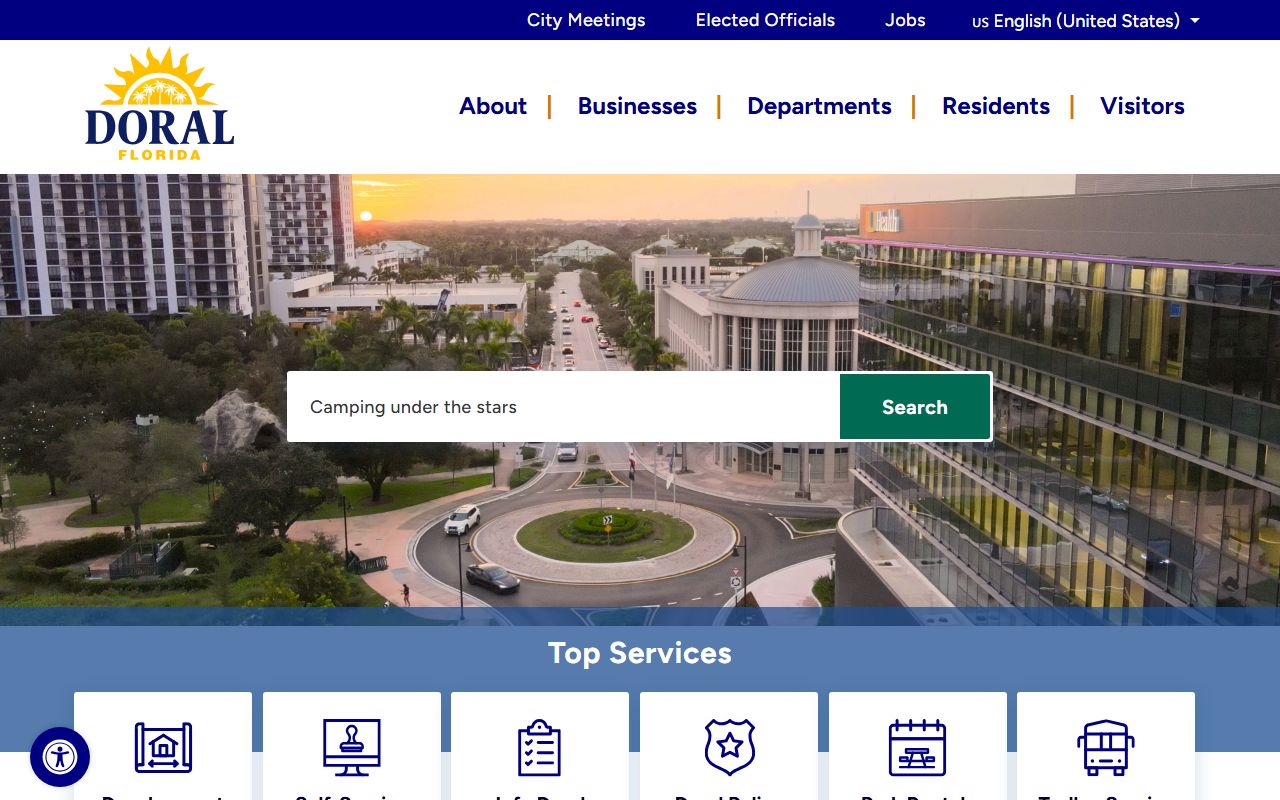
Doral's city site can direct residents to local organizations and services, some of which may provide referrals or assistance for families dealing with estate administration.
How the Probate Process Works for Doral Estates
When a Doral resident dies with assets that require court oversight, the probate process starts in Miami-Dade County Circuit Court. Florida's Probate Code, found in Chapters 731 through 735 of the Florida Statutes, governs every step.
The first legal obligation is filing the original will with the clerk within ten days of the testator's death. Florida statute section 732.901 requires this even if no estate will be opened immediately. The will must be filed with the Clerk of Courts and kept in the official records. Not filing a known will when required is a misdemeanor under Florida law.
To open a Formal Administration, the personal representative or attorney files a petition for administration with the Miami-Dade probate division. The petition names the decedent, lists heirs and beneficiaries, describes the estate, and identifies the proposed personal representative. The court reviews the filing, admits a valid will to probate, and issues Letters of Administration granting the personal representative authority to act on behalf of the estate.
Once appointed, the personal representative publishes a Notice to Creditors in a qualifying Miami-Dade newspaper for two consecutive weeks. Direct notice must be served on known or reasonably ascertainable creditors within 30 days of the personal representative's appointment. Creditors then have 90 days from the date of first publication to file claims. Late claims are generally barred.
After the creditor period, the personal representative pays valid debts, taxes, and administrative costs. A final accounting is filed with the court, and beneficiaries have an opportunity to object. Once the court approves the accounting, it issues an Order of Discharge, closing the estate and ending the personal representative's authority.
Summary Administration is faster because it skips the personal representative and creditor period. Heirs file a single petition, and if the estate qualifies by value or timing, the court issues an order distributing assets. For small Doral estates that meet the threshold, Summary Administration is usually the better route given Miami-Dade's busy Formal Administration docket.