
Find Probate Court Records in Miami Beach
Miami Beach residents file probate cases through Miami-Dade County, served by the 11th Judicial Circuit. The Miami-Dade County Courthouse in downtown Miami handles all probate matters for the county. This page explains how to find records, who to contact, what fees to expect, and how the process works for families dealing with an estate in Miami Beach.
Miami Beach Quick Facts
Which County Handles Probate for Miami Beach
Miami Beach is a city in Miami-Dade County. All probate cases for people who lived in Miami Beach at the time of death are filed with the Miami-Dade Clerk of Courts. Florida law is clear on this point: probate must be opened in the county where the deceased person was domiciled, so Miami-Dade is the right county for Miami Beach estates.
The clerk's probate division is located at the main courthouse in downtown Miami, not in Miami Beach itself. There is no probate branch office on Miami Beach. Families must go to the Miami courthouse or use mail and online options where available. The clerk's website offers online case search and some document request tools, which reduces the need to travel in many cases.
| Clerk of Court | Juan Fernandez-Barquin |
|---|---|
| Address | Miami-Dade County Courthouse, 73 W Flagler St, Miami, FL 33130 |
| Phone | (305) 275-1155 |
| Website | miami-dadeclerk.com |
| Hours | Monday - Friday, 8:00 AM to 5:00 PM |
For a full breakdown of Miami-Dade County probate procedures, local fees, and resources, visit the Miami-Dade County probate records page.
How to Search Miami Beach Probate Records
The Miami-Dade Clerk of Courts provides an online case search tool that covers probate filings. You can search by the decedent's name, case number, or filing date. Most probate case records are public in Florida, though certain documents such as inventories and accountings are confidential under state law and are not visible to the public.
Go to miami-dadeclerk.com and use the online records portal. A last name is the minimum you need to get started. Results will show the case number, the personal representative's name, the filing date, and the case status. You can also see what documents have been filed, though confidential items will not be shown.
If you need copies of specific documents, you can request them in person at the courthouse or by mail. Certified copies cost more than plain copies. The clerk charges a per-page fee plus a certification fee per document. Check the clerk's website for current pricing before you submit a request.
The 11th Judicial Circuit also maintains case information online. Its portal shows judge assignments and hearing dates for active probate cases.
The 11th Circuit's court website provides hearing schedules and case lookup tools for Miami-Dade County probate matters.
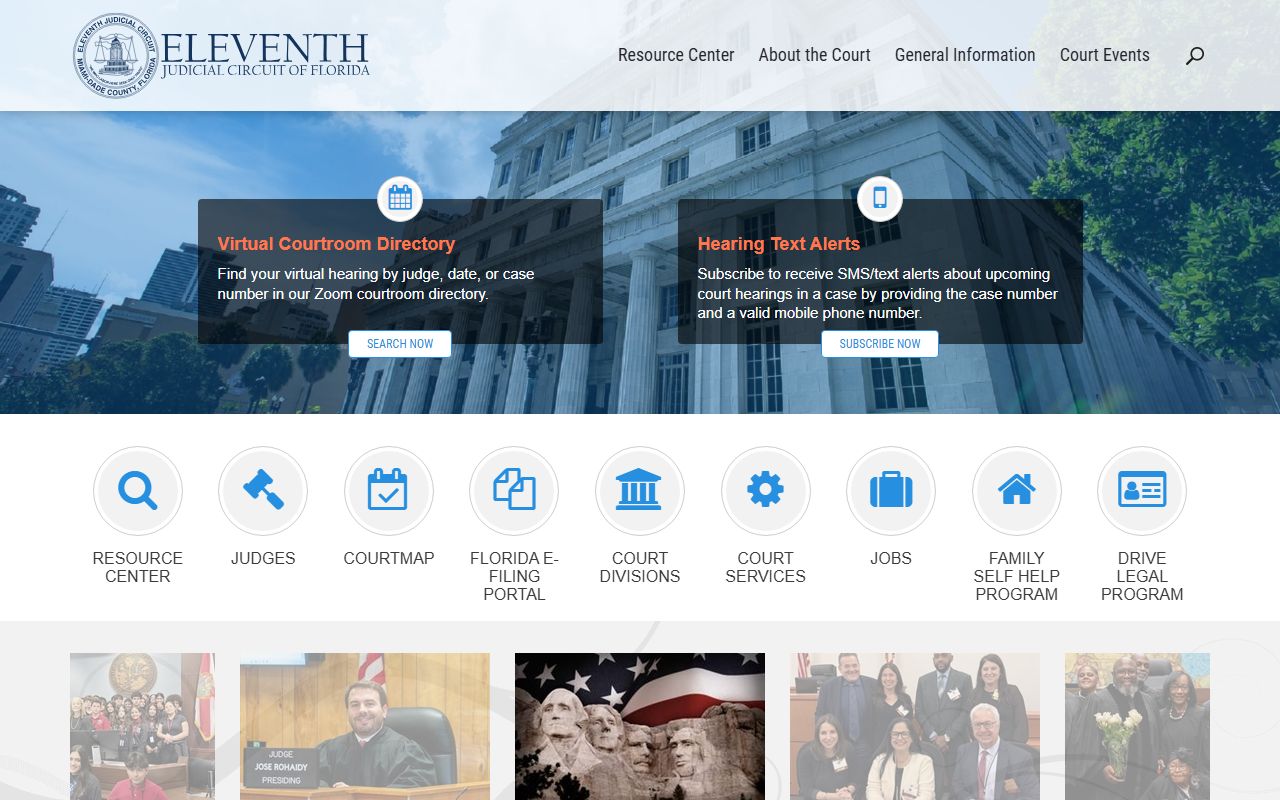
The 11th Circuit serves Miami-Dade County and handles one of the largest probate caseloads in Florida given the county's size and population.
For older records, some files may be stored off-site. The clerk's office can tell you how to request archived documents. In some cases, records from closed estates going back several decades are still available, though retrieval takes longer.
Types of Probate Cases in Miami-Dade County
Florida offers a few different paths through probate, and the right one depends on the estate's size and when the person died. All of the following case types for Miami Beach residents are handled by the Miami-Dade Clerk and the 11th Circuit.
Formal Administration is required for estates where the non-exempt assets are worth more than $75,000. This is the full probate process. A personal representative is appointed by the court. Known creditors are notified. A notice to creditors is published in a local newspaper. An inventory of estate assets is filed with the clerk. After the creditor period closes, claims are paid and assets are distributed under court supervision. Formal administration can take anywhere from six months to well over a year.
Summary Administration is available for smaller estates valued at $75,000 or less in non-exempt assets, or when the decedent has been dead for more than two years regardless of estate size. It is much faster. The petitioner files a petition and a proposed distribution plan. No personal representative is appointed. If the court approves, the order can issue in weeks rather than months.
Disposition Without Administration applies in narrow cases where there is no real property, the only debts are funeral and medical expenses, and the total assets are under $6,000. This is handled at the clerk's counter without a court hearing. It is the fastest and cheapest option but only works in specific situations.
Under Florida Statute 732.901, any person who has custody of a will must file it with the clerk within 10 days of the decedent's death. This is required even if no probate is planned. The clerk keeps the will on file as a permanent public record.
The city of Miami Beach does not operate its own probate division. All estate filings for Miami Beach residents go through Miami-Dade County.
The Miami Beach city website covers city services and local government information, separate from any probate court function.
For probate matters, the courthouse in downtown Miami is the correct place to file, not any city office in Miami Beach.
Probate Filing Fees in Miami-Dade County
Filing fees in Miami-Dade County follow Florida's standard probate fee schedule. The state sets minimum fee amounts, though counties may add local filing surcharges. Fees do change, so always confirm current amounts with the clerk's office before you file.
For formal administration, expect to pay a filing fee in the range of $400 or more when opening the estate. Additional costs come from publishing the notice to creditors in a local newspaper, which is typically a few hundred dollars. Certified copies of letters of administration and other court documents cost extra per page and per document.
Summary administration petitions carry a lower filing fee, generally in the $235 to $300 range. The total out-of-pocket cost for a summary administration is much lower than for formal administration, which is one reason families choose it when they qualify.
Attorney fees in Florida probate cases are governed by statute. The statutory rate starts at 3% of the gross estate value for the first $1 million. Personal representatives are also entitled to a fee based on the same statutory schedule. These fees are paid from estate assets.
The Miami-Dade Clerk's website lists current fees. You can also call the probate division directly at (305) 275-1155 to ask about costs before filing.
The clerk's online portal shows the current fee schedule and provides forms needed to open a probate case in Miami-Dade County.
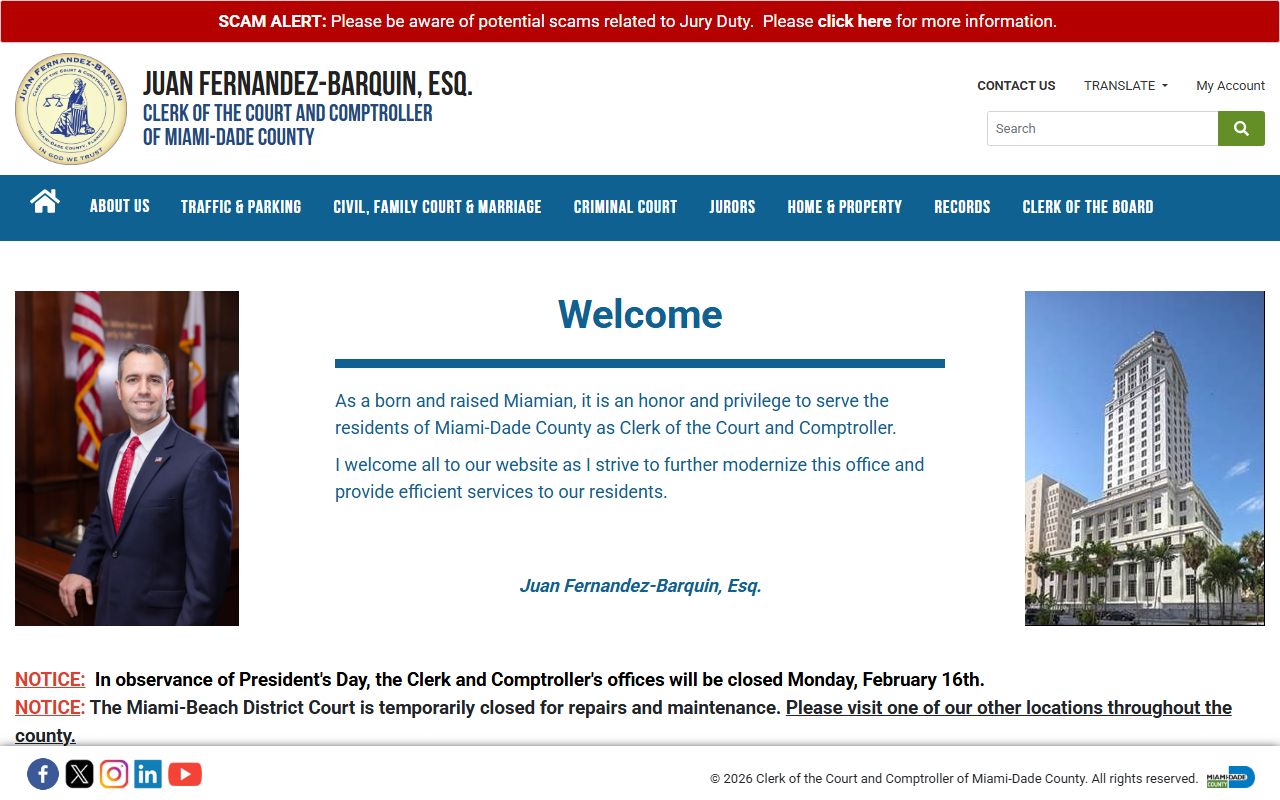
The Miami-Dade Clerk's site includes filing instructions, fee schedules, and access to probate case records for estates opened in the county.
Legal Resources for Miami Beach Residents
Several organizations can help Miami Beach residents navigate probate. The Dade County Bar Association runs a lawyer referral service that can connect you with a licensed probate attorney. Their number is (305) 371-2525. You can also search the Florida Bar's online directory at floridabar.org to find probate lawyers in Miami-Dade County.
Legal Services of Greater Miami provides free civil legal assistance to income-eligible residents. They handle some probate matters, particularly for low-income families. Their main office is in Miami and they serve Miami-Dade County, including Miami Beach. Call (305) 576-0080 for intake information.
The 11th Circuit also maintains self-help resources at the courthouse for people who want to handle simple estates without an attorney. Summary administration petitions and disposition without administration requests are sometimes manageable without legal help, though complex estates almost always need an attorney.
Florida probate law is in Chapters 731 through 735 of the Florida Statutes. These are available free at leg.state.fl.us. Chapter 733 covers formal administration, and Chapter 735 covers summary and other simplified procedures.
Spanish-language resources are widely available in Miami-Dade County given the county's large Spanish-speaking population. The clerk's office and many local attorneys provide services in Spanish.
The Probate Process for Miami Beach Estates
When a Miami Beach resident dies leaving assets that require probate, the process begins at the Miami-Dade County Courthouse. Here is a general walkthrough of how formal administration works in the 11th Circuit.
First, if a will exists, it must be filed with the clerk within 10 days of death. Then a petition for administration is filed along with the original will (if any) and a certified copy of the death certificate. The court reviews whether the petitioner and any proposed personal representative are qualified. Florida law limits who can serve as personal representative; non-relatives who are not Florida residents generally cannot serve.
Once the personal representative is appointed, they receive letters of administration from the clerk. These letters give them legal authority to manage estate assets. They must then notify all known creditors by mail and publish a notice to creditors in a local newspaper for two consecutive weeks. Creditors have three months from the first publication date to file claims.
During the creditor period, the personal representative inventories all estate assets. The inventory goes to the court but is kept confidential. After the creditor period ends, valid claims are paid. Then the personal representative prepares a final accounting and petitions the court for discharge. When the court approves, the estate is closed.
Miami Beach estates that include real property, business interests, or assets in multiple states tend to be more complex. These situations almost always call for an experienced probate attorney. Simpler cases, especially summary administrations, are sometimes handled by families directly.
Processing time in Miami-Dade can be longer than in smaller counties due to case volume. Plan for at least six to nine months for a straightforward formal administration in the 11th Circuit.