
Find Probate Court Records in Hollywood, Florida
Hollywood probate court records are handled through the Broward County Clerk of Courts, which serves the 17th Judicial Circuit. When a Hollywood resident dies and their estate goes through probate, all filings, orders, and wills become part of the Broward County court record. This page covers where those records are kept, how to search and copy them, what the filing process looks like, and what types of cases come through Broward County's probate division.
Hollywood Quick Facts
Which Court Handles Hollywood Probate Cases
Hollywood is a Broward County city, so probate is handled by the Broward County Clerk of Courts. Clerk Brenda Forman oversees all probate filings. The main courthouse is located in Fort Lauderdale at 201 SE 6th Street. There is no local probate court in Hollywood. All petitions, wills, inventories, and estate documents are filed at that address or submitted through the Florida Courts E-Filing Portal for attorney accounts.
The 17th Judicial Circuit is Broward County only. It is one of the busier probate circuits in Florida, given the large population and the number of retirees in cities like Hollywood. The circuit court's probate division hears formal administration cases, supervises guardianships, and approves summary administrations. Judges are assigned to probate divisions on a rotating basis, and the clerk's office can tell you which division your case is assigned to.
| Clerk of Court | Brenda Forman |
|---|---|
| Address | Broward County Courthouse, 201 SE 6th St, Fort Lauderdale, FL 33301 |
| Phone | (954) 831-6565 |
| Website | www.browardclerk.org |
| Hours | Monday - Friday, 8:00 AM to 5:00 PM |
You can also visit the Broward County probate records page for a full overview of the county's court system, filing locations, and contact details.
Searching for Probate Records Online
The Broward County Clerk's website at browardclerk.org includes a public case search system. You can search by the name of the deceased person, by case number, or by the attorney or personal representative listed on the case. The online system covers most cases filed in recent decades. If you are searching for an older case, you may need to call the clerk or visit in person.
The Florida Courts E-Filing Portal at myflcourtaccess.com is another option. Members of the public can access docket information for many case types. Some documents within a case may be viewable online while others require an in-person inspection at the courthouse.
For cases with a known case number, the search is straightforward. For cases where you only know the deceased person's name and approximate date of death, you may need to search a range of years. The clerk's search tool allows name searches and usually returns results quickly when the spelling is correct.
The image below shows the 17th Judicial Circuit's website, which is the judicial arm that oversees Hollywood probate cases heard by the Broward County courts.
The 17th Judicial Circuit website provides court news, local administrative orders, and links to case management resources for Broward County probate matters.
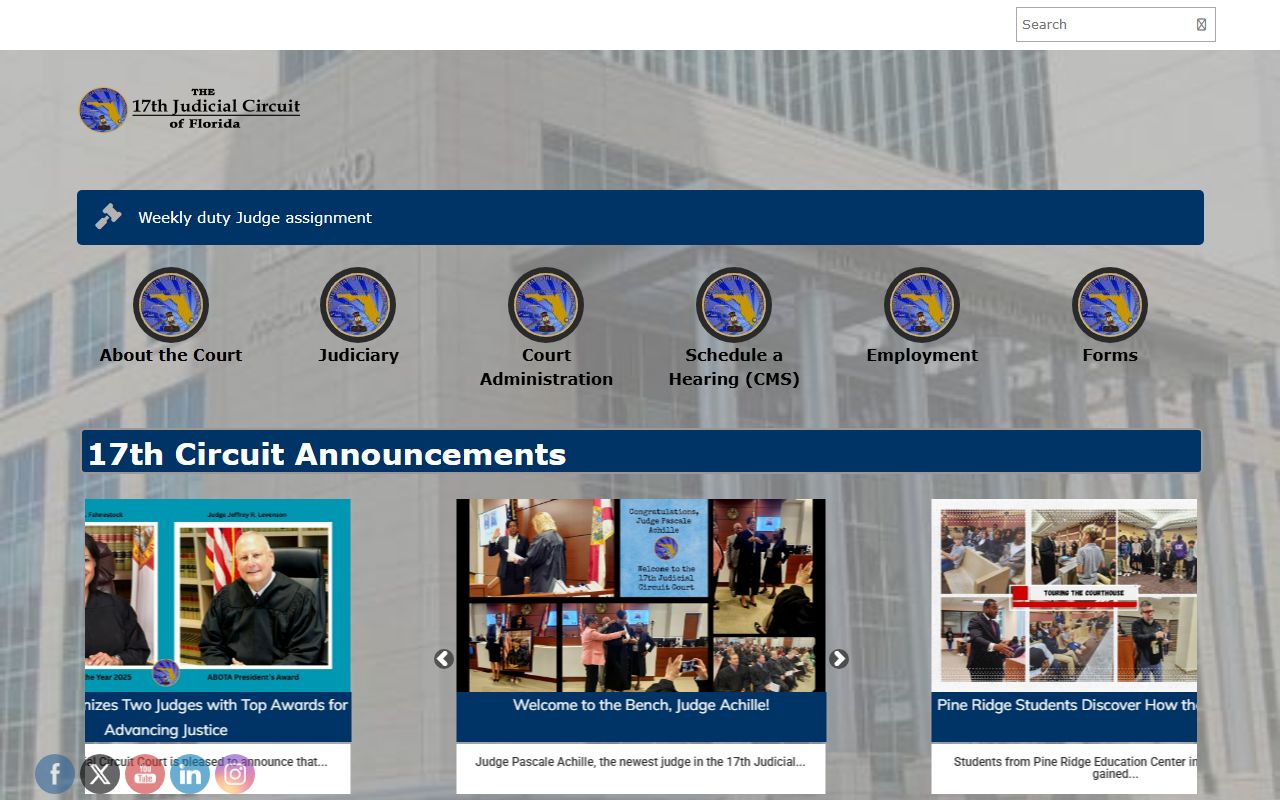
Administrative orders posted on this site can affect how probate cases in Hollywood are processed, including filing deadlines and hearing procedures.
Types of Probate Cases in Hollywood
Florida probate law under Chapters 731 through 735 of the Florida Statutes defines the types of estate proceedings available. The right type depends on the size of the estate and the time since death.
Formal administration is for estates worth more than $75,000. This is the standard probate process. It requires appointing a personal representative (what other states call an executor), notifying creditors, creating an inventory of assets, paying valid debts, and distributing the remainder to heirs or beneficiaries. Florida law generally requires an attorney for formal administration cases. The process takes at least six months and often longer when estates are large or contested.
Summary administration is available when the estate's gross value is $75,000 or less, or when the decedent has been dead for two or more years. It is faster and simpler. A petition is filed, and the court issues an order of summary administration directing how assets should be distributed. No personal representative is appointed. An attorney is not required by law for summary administration, though many people hire one for guidance.
Disposition without administration is the simplest path. It applies only when the estate has no real property, no formal debts to pay, and the assets are limited to funds needed to cover final medical and funeral expenses, with a value under $6,000. This is handled at the clerk level without a full court hearing.
Ancillary administration comes up when someone who lived outside Florida died owning property in Florida. The primary probate happens in the home state, but a secondary proceeding is needed in Florida to transfer the Florida assets.
Filing Fees and Copy Costs
Broward County's clerk collects fees set in part by Florida Statutes and in part by local fee schedules. The amounts below are general ranges. Always confirm current fees with the clerk before you file.
Opening a formal administration case costs roughly $400 or more, with the exact amount tied to the estimated estate value. Each subsequent filing, such as a petition for discharge or a motion for extension, carries its own fee. Certified copy fees run around $1.00 to $2.00 per page, plus a per-document certification charge.
Summary administration fees are lower. Expect to pay somewhere in the range of $235 to $400 to open the case. The clerk will tell you the exact figure when you call or visit. There are also fees for certified copies of the order of summary administration, which heirs typically need when transferring bank accounts or property titles.
If you need a disposition without administration, the fee is small, often under $100. Call the clerk's probate division to confirm the current rate before you submit your documents.
Fee waivers exist for people who cannot afford court costs. You file an affidavit of indigency with the clerk. If the court approves it, you can proceed without paying the filing fee. The clerk's office has the form.
The image below shows the Broward County Clerk of Courts website, where you can find the current fee schedule under the probate division section.
Visit browardclerk.org to access the probate filing fee schedule and download forms needed to open a Hollywood estate case.
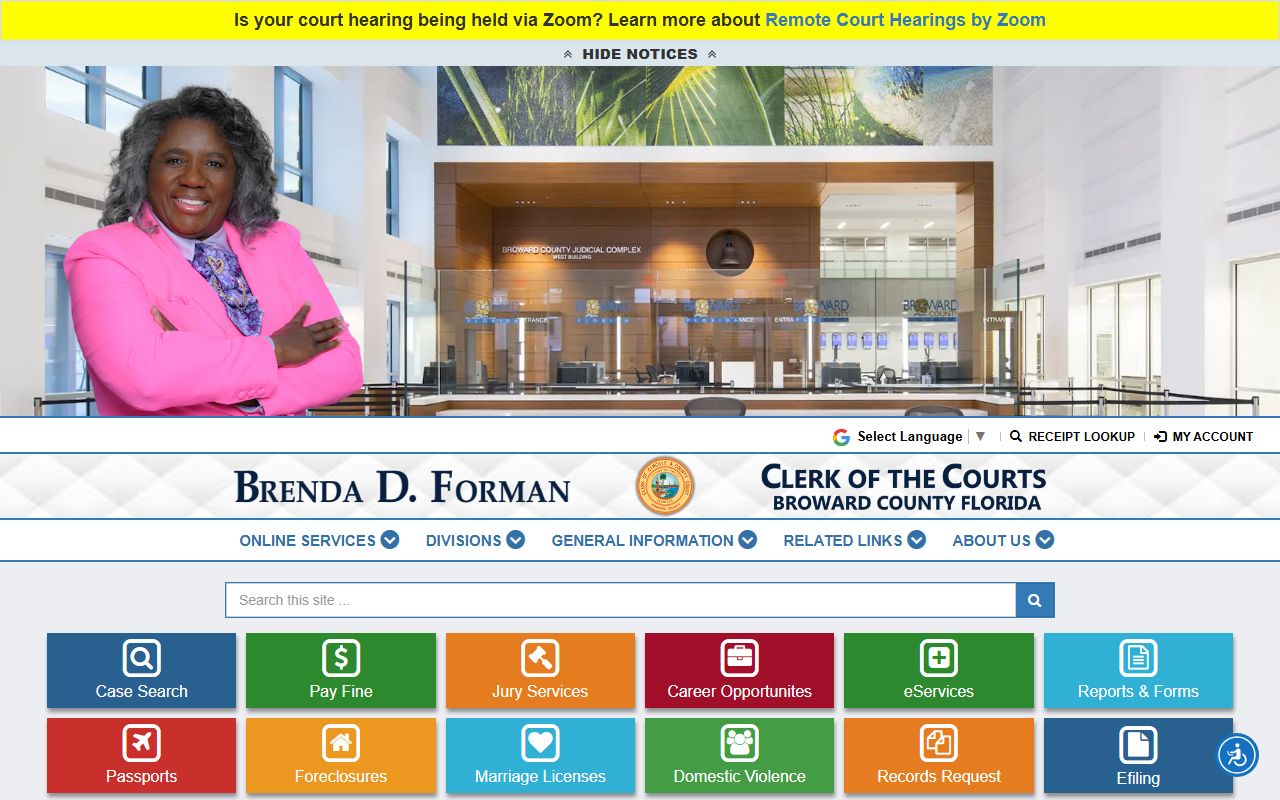
The clerk's website also has contact information for specific divisions and a list of self-help resources for people handling probate without an attorney.
Wills and Public Record Access
Florida has broad public records laws. Most documents filed in a probate case are open to the public. That includes the petition to open the estate, the will if one exists, inventories, accountings, court orders, and the final discharge order. You do not have to be a relative or a party to the case to inspect or copy these records.
There is one key rule about wills before death. A will deposited with a court clerk while the testator is still alive is confidential. Under section 732.901 of the Florida Statutes, custodians of wills must deposit them with the circuit court clerk within 10 days of the testator's death. Once that happens and a case is opened, the will becomes part of the public record.
To get copies of probate records, go to the clerk's office, write in with the case number, or request online if the system allows it. Bring a photo ID for in-person requests. For mail requests, include the case name and number, the specific documents you need, your mailing address, and a check for the estimated fees. The clerk will send back copies and a bill or refund if the estimate was off.
The City of Hollywood's own website at hollywoodfl.org does not maintain probate records, but it can be a useful starting point for finding city contact information, local legal aid referrals, and community services.
The City of Hollywood Florida website provides local government contacts and community resources that can help residents navigate the probate process.
While the city does not maintain court records, its community services links can point residents to legal aid and social services during the estate process.
Legal Help for Hollywood Residents
If you need help navigating probate but can't afford an attorney, Legal Aid Service of Broward County provides free civil legal assistance to qualifying low-income residents. Probate is one of the areas they cover. Reach them at legalaidbroward.org.
The Broward County Bar Association runs a lawyer referral service at browardbar.org. Many probate attorneys in the area offer a free initial consultation. The Florida Bar's statewide referral service is also available at floridabar.org.
The full Florida Probate Code is at Chapter 731 through Chapter 735 of the Florida Statutes. Chapter 733 covers formal administration in detail. Chapter 735 covers summary administration and disposition without administration. These are public documents and free to read on the Florida Legislature's website.