
Pembroke Pines Probate Court Records
Probate court records for Pembroke Pines estates are filed and maintained by the Broward County Clerk of Courts, which handles all probate matters for the 17th Judicial Circuit. If someone died as a resident of Pembroke Pines, their estate case will be on file in Broward County. This page explains where to search those records, how to request documents, what types of probate cases exist, and what fees you can expect to pay when filing or obtaining copies.
Pembroke Pines Quick Facts
Which Court Handles Probate in Pembroke Pines
Pembroke Pines sits entirely within Broward County, so all probate filings go to the Broward County Clerk of Courts. The clerk is Brenda Forman, and the main courthouse is in Fort Lauderdale. There is no separate probate court in Pembroke Pines itself. Residents drive to the main Broward courthouse or submit filings by mail. The clerk's office processes estates for all 31 municipalities in Broward County, including Pembroke Pines, Hollywood, Miramar, and Davie.
Probate is governed by the 17th Judicial Circuit, which covers Broward County exclusively. Judges in the circuit court's probate division review formal administrations, summary administrations, and guardianship petitions. For most families, the first point of contact is the clerk's office rather than a judge. The clerk accepts filings, collects fees, issues letters of administration, and keeps the official case records.
| Clerk of Court | Brenda Forman |
|---|---|
| Address | Broward County Courthouse, 201 SE 6th St, Fort Lauderdale, FL 33301 |
| Phone | (954) 831-6565 |
| Website | www.browardclerk.org |
| Hours | Monday - Friday, 8:00 AM to 5:00 PM |
You can also reach the clerk through the Broward County probate records page, which covers all filing locations and division contacts within the county.
How to Search Pembroke Pines Probate Records
The Broward County Clerk offers an online case search tool at browardclerk.org. You can search by decedent name, case number, or attorney of record. Most probate cases filed after the early 2000s appear in the online system. Older records may require an in-person visit or a written request to the clerk.
The 17th Circuit also provides case information through the Florida Courts E-Filing Portal. Attorneys and parties with active cases can log in to view dockets and upload documents. Members of the public without a login can still use the clerk's public search portal without creating an account.
The 17th Judicial Circuit's website at 17th.flcourts.org has additional resources, including local administrative orders that govern how probate cases proceed in Broward County. These orders sometimes affect filing requirements and hearing schedules.
The Florida Department of Health maintains a separate vital records database for death certificates, which are required to open a probate case. Death records are not part of the court clerk's system. You order them through the Florida Bureau of Vital Statistics.
The lead-in image below shows the 17th Circuit's public-facing web portal, which is the starting point for researching active and closed Pembroke Pines estate cases.
The 17th Judicial Circuit court website provides links to case search tools and local rules for Broward County probate proceedings.
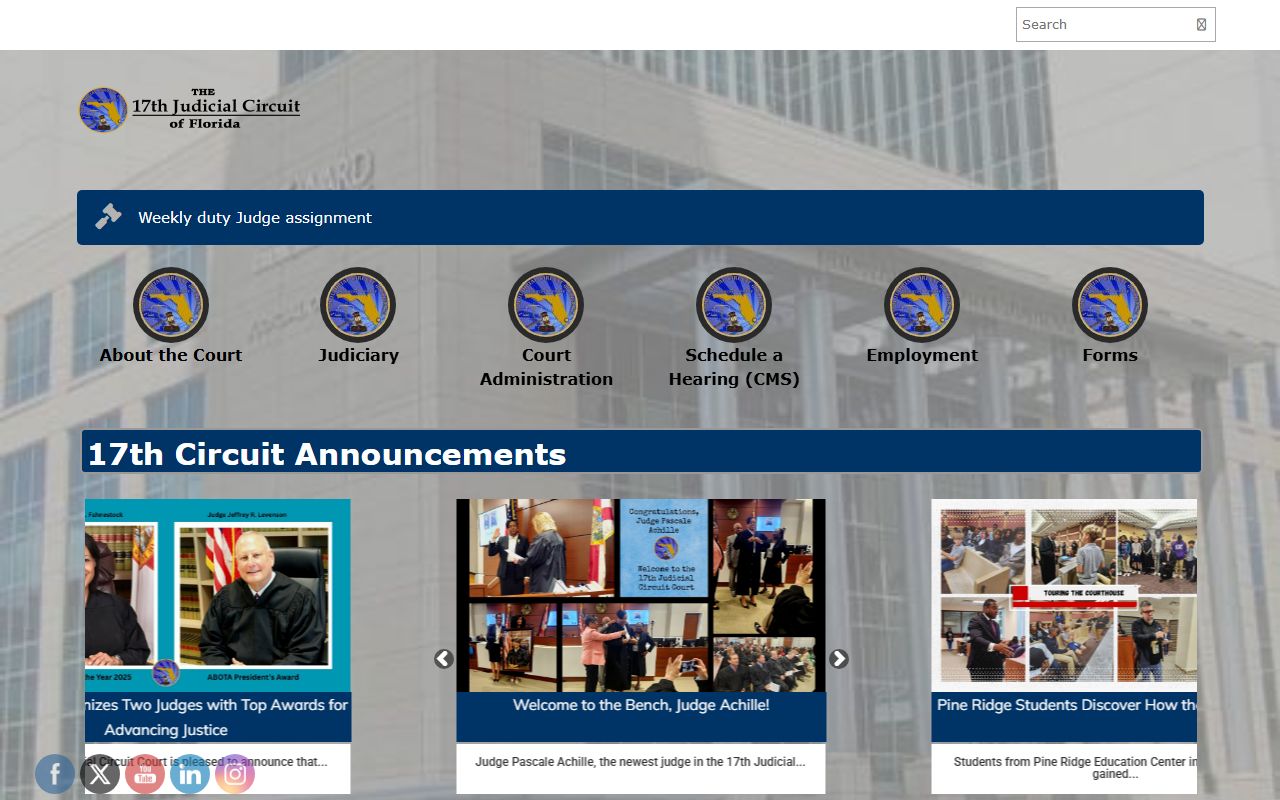
From this portal you can navigate to the clerk's case search system to look up estate filings by decedent name or case number.
Types of Probate Cases Filed in Broward County
Florida law sets out several ways to handle a decedent's estate, and the right one depends on how much the estate is worth and how long ago the person died. Most Pembroke Pines families will use one of three main procedures.
Formal administration is required when the estate's value exceeds $75,000. This is the full probate process. It involves appointing a personal representative, publishing a notice to creditors, inventorying assets, paying debts, and distributing what remains to heirs. Formal administration typically takes six months to a year, sometimes longer if disputes arise. An attorney is strongly recommended and often required.
Summary administration is available when the estate is worth $75,000 or less, or when the decedent has been dead for more than two years. It is faster and less expensive than formal administration. The court issues an order of summary administration instead of appointing a personal representative. There is no creditor publication period of the same length, which speeds things up considerably.
Disposition without administration is the simplest option. It applies when the estate has no real property and the only assets are needed to pay funeral and medical bills, with a total value under $6,000. The clerk processes this without a full court proceeding. It is relatively rare but useful for very small estates.
Ancillary administration handles property that a non-Florida resident owned in Florida at death. If a Pembroke Pines resident owned property in another state, that state's courts would handle ancillary proceedings for the Florida assets.
Probate Filing Fees in Broward County
The Broward County Clerk charges filing fees based on the estimated value of the estate. Florida statutes set the base fee schedule, but clerk offices also collect service charges that vary slightly. Below are the general ranges you can expect.
For formal administration, the opening fee is typically $400 or more, depending on estate size. Additional fees apply for each motion, petition, or document filed after the initial opening. Certified copy fees run around $1.00 to $2.00 per page plus a per-document certification fee. Exemplified copies cost more.
Summary administration fees are lower. The petition to open a summary administration typically costs between $235 and $400. The clerk can give you the exact current fee when you call or visit. Fee schedules do change, so always verify before you go.
Disposition without administration carries a smaller fee, often under $100. The clerk's office can confirm the current rate for this type of proceeding.
Some fee waivers are available for low-income filers. Florida law allows courts to waive civil filing fees for people who cannot afford them. You must submit an affidavit of indigency. The clerk's office can provide the form.
The image below shows the Broward County Clerk's official website, where current fee schedules and filing instructions are posted for probate and other civil matters.
Visit the Broward County Clerk of Courts website to view current probate fee schedules and download filing forms.
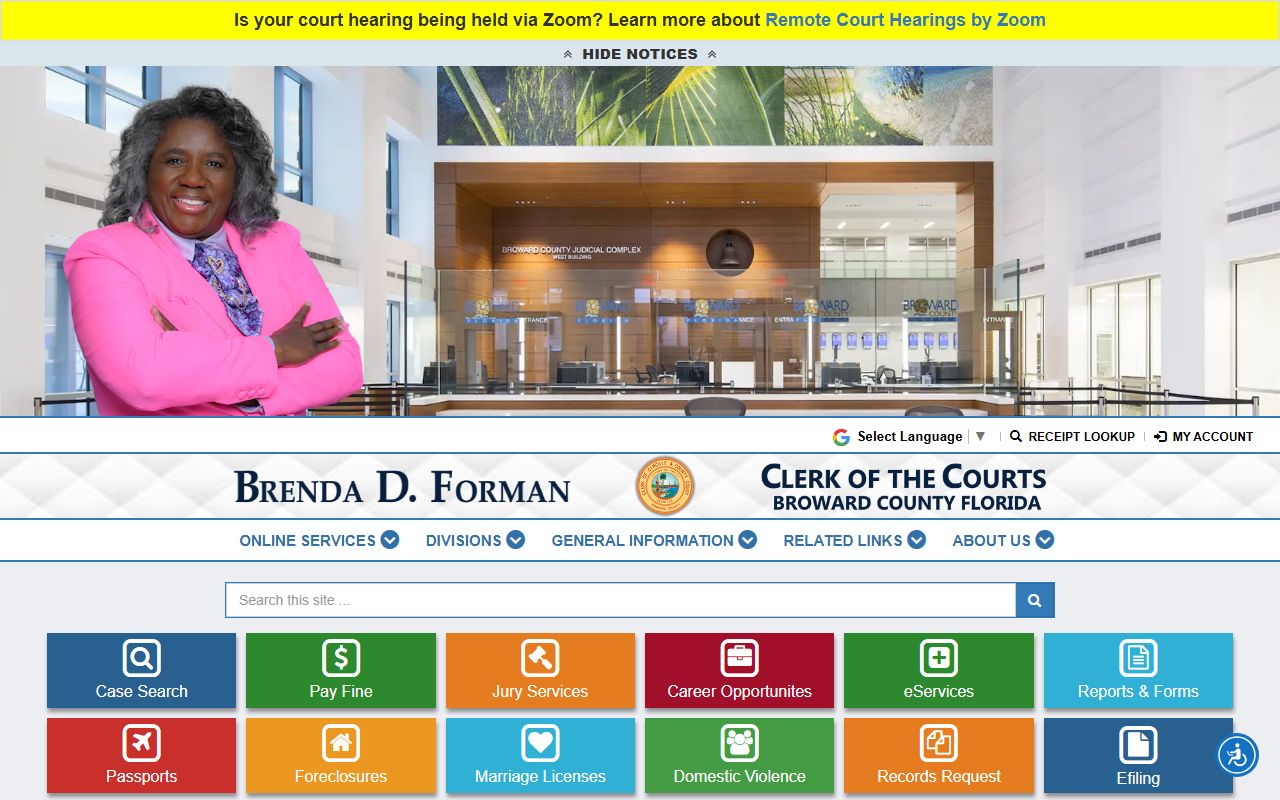
The clerk's site also has a list of court locations and contact numbers for each division, including the probate division.
What Records Are Public and What Is Confidential
Florida law makes most probate records public. Anyone can view and copy petitions, wills admitted to probate, orders, inventories, and accountings once they are filed with the clerk. You do not need to be a party to the case. Court records are open under Florida's broad public records law, Chapter 119, Florida Statutes.
There are some exceptions. Medical records attached to a case may be sealed. Financial account numbers within documents are sometimes redacted. Guardianship records involving minors or incapacitated adults may have additional restrictions.
Wills that are deposited with the clerk before a person dies are confidential during the depositor's lifetime. Under section 732.901, Florida Statutes, a will must be deposited with the clerk within 10 days of the testator's death. Once deposited and a case is opened, the will becomes part of the public record.
To get copies, you can request them in person, by mail, or through the clerk's online portal if the document is available digitally. Bring a valid ID for in-person requests. For mail requests, include the case number, a description of the documents you want, your return address, and a check for the estimated copy fee.
Legal Resources for Pembroke Pines Residents
Not everyone can afford a probate attorney. Several organizations serve Broward County residents who need legal help with estates and related matters.
Legal Aid Service of Broward County provides free civil legal help to qualifying low-income residents. Probate matters are among the types of cases they handle. You can reach them at legalaidbroward.org or by calling their intake line to see if you qualify.
The Broward County Bar Association has a lawyer referral service that can connect you with a licensed probate attorney. Many attorneys offer a free or low-cost initial consultation. You can find the referral service at browardbar.org.
The Florida Bar also has a lawyer referral service statewide. If you want to handle a simple summary administration without an attorney, the clerk's self-help center may have forms and basic instructions.
The full Florida Probate Code runs from Chapter 731 through Chapter 735 of the Florida Statutes. Chapter 733 covers formal administration, and Chapter 735 covers summary administration and disposition without administration. Reading these chapters will give you a solid foundation even if you ultimately hire an attorney.