Find Probate Court Records in Homestead
Homestead residents file probate cases in Miami-Dade County through the 11th Judicial Circuit, one of the largest probate court systems in the state. The South Dade Justice Center in Cutler Bay serves as a closer option for many Homestead families, while the main courthouse sits in downtown Miami.
Homestead Quick Facts
- Population: 73,246
- County: Miami-Dade
- Judicial Circuit: 11th
- Formal Administration Threshold: $75,000
Which County Handles Probate for Homestead
Homestead is in Miami-Dade County, so all probate cases for Homestead residents go through Miami-Dade County Circuit Court under the 11th Judicial Circuit. Miami-Dade is one of Florida's most active probate courts due to its large and diverse population. The Clerk of Courts is Juan Fernandez-Barquin.
The main Miami-Dade probate courthouse is at 73 W Flagler Street in downtown Miami. For Homestead residents who do not want to travel that far, the South Dade Justice Center at 10710 SW 211th Street in Cutler Bay is considerably closer and handles many civil matters for the southern part of the county. Check with the clerk's office to confirm which types of probate filings can be submitted at the South Dade location.
| Clerk of Court | Juan Fernandez-Barquin |
|---|---|
| Main Address | Miami-Dade County Courthouse, 73 W Flagler St, Miami, FL 33130 |
| South Dade Branch | South Dade Justice Center, 10710 SW 211th St, Cutler Bay, FL 33189 |
| Phone | (305) 275-1155 |
| Website | www.miami-dadeclerk.com |
| Hours | Monday - Friday, 8:00 AM to 5:00 PM |
Lead-in: The 11th Judicial Circuit Court's official site at www.jud11.flcourts.org covers court divisions, judge assignments, and procedures for probate cases in Miami-Dade County.
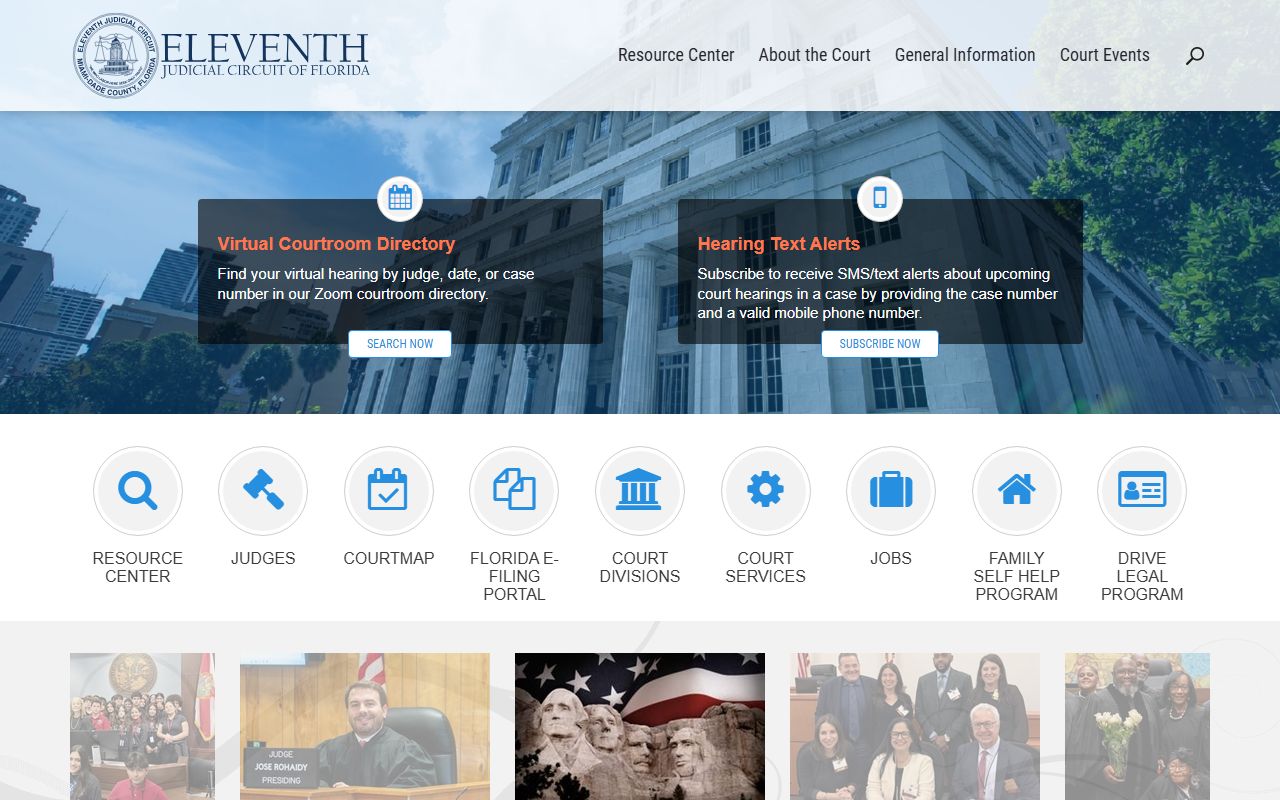
The 11th Circuit site provides access to local administrative orders, court rules, and division-specific instructions that apply to all probate cases filed in Miami-Dade, including those for Homestead estates.
How to Search Homestead Probate Records
Miami-Dade County probate records are public documents, with certain exceptions. Inventories and accountings filed in probate cases are confidential under Florida law. Most other case documents are open to public inspection, including petitions, orders, and notices.
The Miami-Dade Clerk of Courts offers online case search through the clerk's website at miami-dadeclerk.com. The portal allows searches by decedent name, case number, or attorney. It covers a substantial range of filing years. For very old records, you may need to contact the clerk's archives unit or visit in person.
In-person access is available at the downtown Miami courthouse and at the South Dade Justice Center. For Homestead residents, the South Dade location at 10710 SW 211th Street is the more practical option. Bring the full name of the decedent and the approximate year of death. Staff can pull case files for public review. If you know the case number, the search goes faster.
Certified copies of probate documents cost a fee per page plus a certification charge. The clerk's website lists current copy fees. You can also request copies by mail if you include the case number, document description, payment, and a return address. The clerk processes mail requests in the order received.
Lead-in: The Miami-Dade County Clerk of Courts site at www.miami-dadeclerk.com provides the online case search portal and filing guides for probate matters.
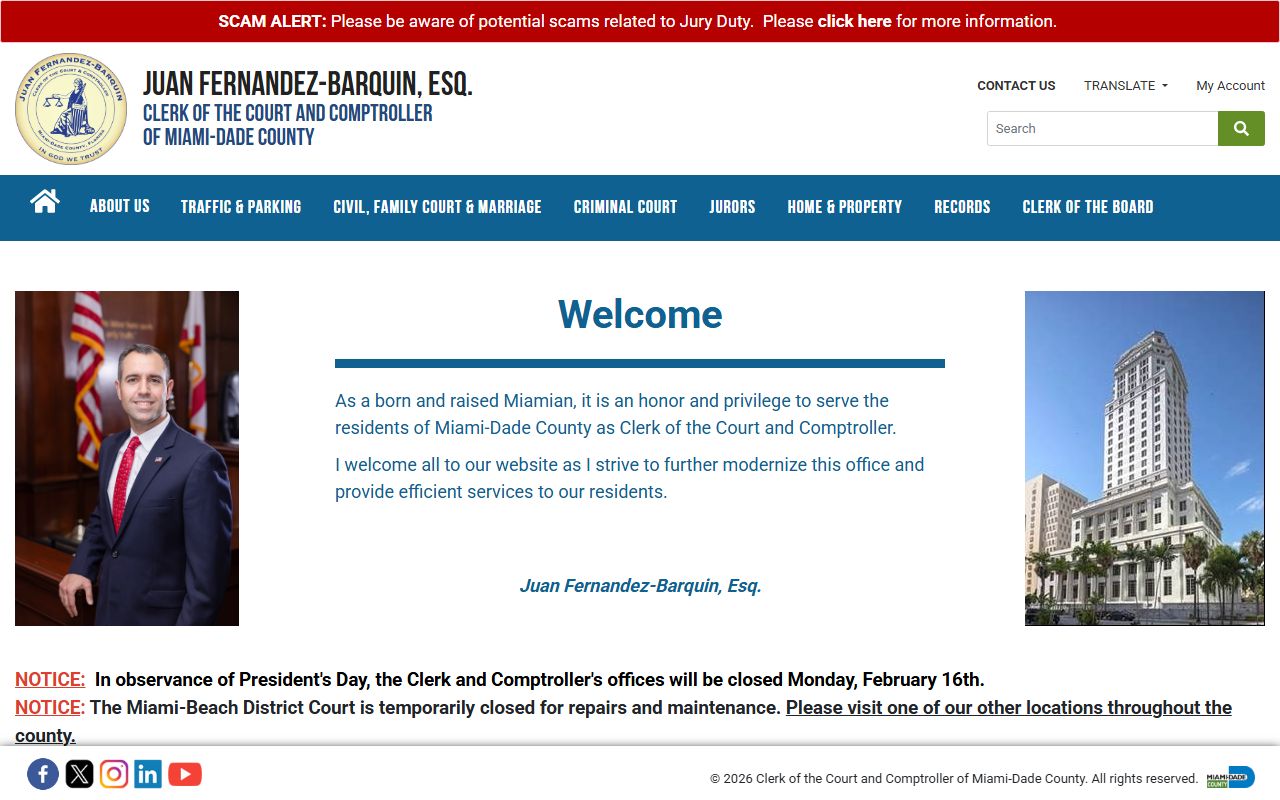
The clerk's site also lists current fees, accepted forms of payment, e-filing options for attorneys, and contact information for each courthouse division.
Types of Probate Cases in Miami-Dade County
Florida law provides three main types of probate administration. The right type for a Homestead estate depends on the value of assets and how long ago the person died.
Formal Administration is for estates with a gross value over $75,000. The court appoints a personal representative to manage the estate under court supervision. The process includes creditor notice, asset inventory, debt payment, and final accounting before the court discharges the personal representative and closes the case. In a county as busy as Miami-Dade, Formal Administration typically takes at least six to twelve months.
Summary Administration is available when the estate value is $75,000 or less, or when the decedent has been dead for two or more years. No personal representative is appointed. The court issues an order of summary administration directing distribution of assets to the heirs named in the petition. It is faster, simpler, and less expensive than Formal Administration.
Disposition Without Administration applies only in narrow circumstances: the estate has no real property, and the only assets are exempt personal property or funds to pay funeral expenses and medical costs from the decedent's last 60 days of life. The non-exempt assets must generally be under around $6,000. The clerk issues an authorization without a full court proceeding.
Miami-Dade also handles a significant volume of ancillary probate cases because many non-Florida residents own property in the county. If a Homestead property is owned by someone who died as a resident of another state, their estate may need to open an ancillary probate in Miami-Dade to transfer title to that property.
Probate Fees in Miami-Dade County
Filing fees for Miami-Dade probate cases follow the Florida statutory fee schedule. The cost to open an estate varies by the type of administration and the estate's reported value.
For Formal Administration, initial filing fees generally start around $400 and go up depending on estate value. Summary Administration carries a lower filing fee, typically in the $235 to $280 range. Disposition Without Administration has the lowest fee. All fees are set by Florida statute and may be updated from time to time.
Additional costs to plan for in Miami-Dade include certified copy fees, court reporter fees if hearings require transcripts, publication costs for the Notice to Creditors, and translation fees if estate documents need to be translated. Miami-Dade's probate division has specific local rules and may assess administrative fees on top of the statutory schedule. Confirm all current costs with the clerk before filing.
Attorney fees follow the Florida statutory schedule for probate, starting at 3% of the first $1 million of estate value for Formal Administration. Attorneys and clients can agree in writing to different fee arrangements. Personal representatives are also entitled to a fee under statute.
Legal Help for Homestead Residents
Homestead residents who need help with probate matters have several options for free or low-cost legal assistance.
Legal Services of Greater Miami serves low-income residents throughout Miami-Dade County, including Homestead. They handle some civil matters including probate for qualifying clients. Their South Dade office is closer to Homestead than the main downtown Miami location. Call their intake line to find out if you qualify for assistance and whether they are taking new probate cases.
The Cuban American Bar Association and other specialty bar groups in Miami-Dade run referral services that can connect residents with probate attorneys. The Dade County Bar Association also has a lawyer referral service with probate specialists. The Florida Bar's referral service at floridabar.org lets you search for licensed attorneys by city and practice area.
Lead-in: The City of Homestead's official site at www.cityofhomestead.com provides local government contacts and community resources that may assist residents navigating estate matters.

The city's site links to local community organizations and social services that can provide referrals to legal aid groups serving the Homestead area.
How Probate Works for Homestead Estates
When a Homestead resident dies with assets that need court oversight, the process begins in Miami-Dade County Circuit Court. The steps for Formal Administration follow a set sequence laid out in Florida's Probate Code, Chapters 731 through 735 of the Florida Statutes.
The first requirement is filing the original will with the clerk within ten days of death, as required by Florida statute section 732.901. This applies even if no probate is planned right away. The will must be filed; failing to file a known will is a misdemeanor under Florida law.
Next, the petition for administration is filed with the Miami-Dade probate division. The petition names the decedent, lists heirs and beneficiaries, describes the estate assets, and identifies the proposed personal representative. The court reviews the filing, admits the will to probate if valid, and issues Letters of Administration granting the personal representative legal authority to act.
The personal representative publishes a Notice to Creditors in a qualifying Miami-Dade newspaper for two consecutive weeks and serves direct notice on known creditors within 30 days of appointment. Creditors have 90 days from first publication to file claims. Claims filed after that deadline are typically barred.
Once the creditor period closes, the personal representative pays valid claims, taxes, and administrative expenses, then files a final accounting with the court. Beneficiaries and interested parties can object to the accounting. If the court approves it, the judge issues an order of discharge, the personal representative's authority ends, and assets pass to the beneficiaries.
Summary Administration skips the personal representative appointment entirely. Heirs file a single petition listing assets and proposed distribution, and if the court approves, assets transfer by court order. In Miami-Dade, a straightforward Summary Administration can often be completed in a few weeks once the petition is filed and the court's docket allows for review.