St. Petersburg Probate Court Records
Probate court records for St. Petersburg residents are filed with the Pinellas County Clerk of Courts in the 6th Judicial Circuit. St. Petersburg is the largest city in Pinellas County, but probate cases go to the Pinellas County Courthouse in Clearwater, the county seat, not in St. Petersburg itself. This page explains how to find those records, what the process involves, and where to get help.
St. Petersburg Quick Facts
Pinellas County Handles Probate for St. Petersburg Residents
Probate is always filed in the county where the decedent lived, not in the city. St. Petersburg residents file probate with the Pinellas County Clerk of Courts. The courthouse is in Clearwater, the county seat, about 20 miles north of downtown St. Petersburg. Ken Burke is the Pinellas County Clerk of Courts.
| Clerk of Court | Ken Burke |
|---|---|
| Address | Pinellas County Courthouse, 315 Court St, Clearwater, FL 33756 |
| Phone | (727) 464-7000 |
| Website | pinellasclerk.org |
| Hours | Monday - Friday, 8:00 AM to 5:00 PM |
The 6th Judicial Circuit covers both Pinellas and Pasco counties. Pinellas County probate matters are handled in Clearwater. Pasco County matters go to the Pasco County Courthouse in New Port Richey or Dade City. St. Petersburg residents must travel to Clearwater for in-person filings or courthouse business unless they file electronically. For complete county information, see the Pinellas County probate records page.
The Pinellas County Clerk's office accepts probate filings in person at the Clearwater courthouse. Filings can also be submitted through the Florida Courts E-Filing Portal, which is the primary method for attorneys and is also available to self-represented parties. Some documents can be mailed. Call the clerk's office before mailing to confirm the current procedure.
How to Search St. Petersburg Probate Records
The Pinellas County Clerk provides an online case search at pinellasclerk.org. You can search by the decedent's name, case number, or filing date. The system shows case type, filing date, parties, and current status. Most active and recently closed probate cases are accessible online at no charge.
For the St. Petersburg city website as a reference for residents navigating county services.

The City of St. Petersburg's site does not manage probate cases directly, but it provides general information about county resources and services that residents may need.
Some documents in online case records are viewable directly from the docket. Others require a trip to the courthouse or a written copy request. Florida law makes inventories and accountings in probate cases confidential, so those documents will not appear in public searches even when the case itself is visible in the system.
To search Pinellas County probate records online, use the clerk's official portal.
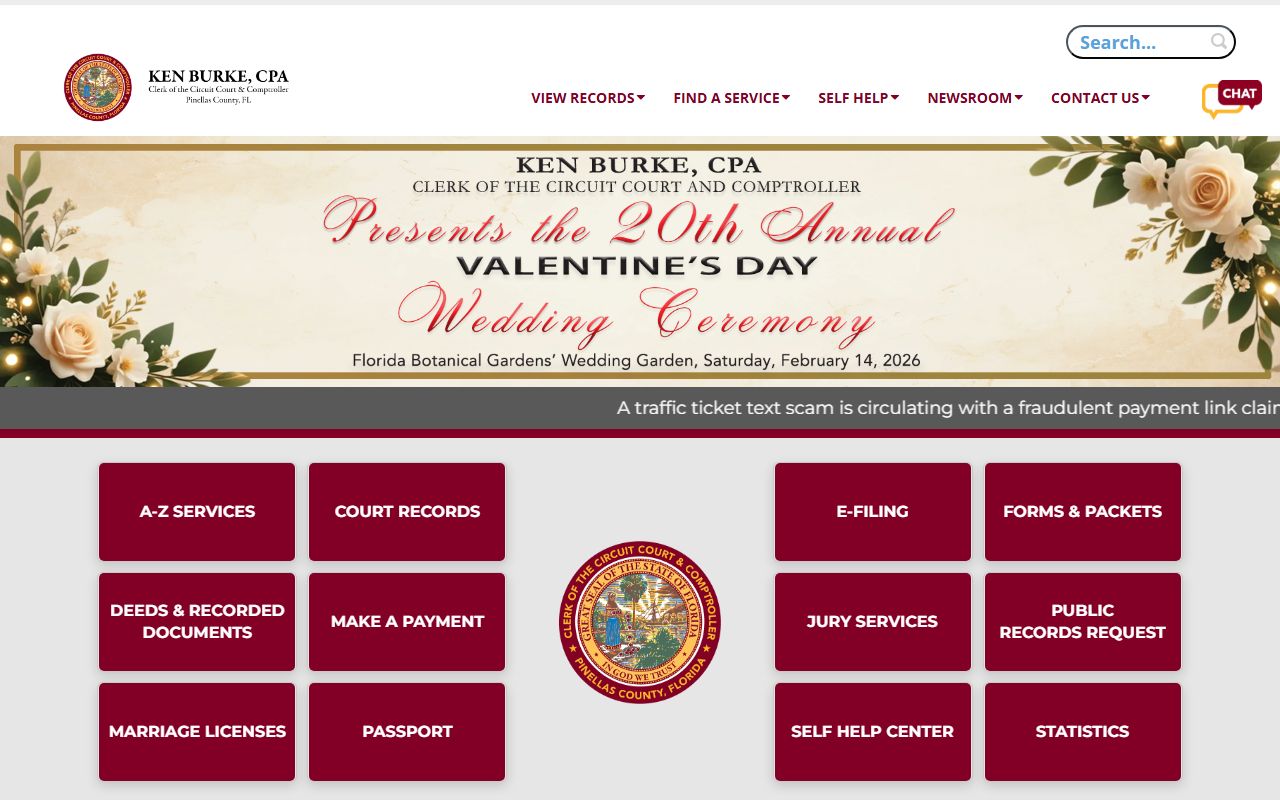
The pinellasclerk.org search tool lets you look up probate cases by decedent name or case number. Results include docket entries, parties, and the current status of the case.
Plain copies of documents cost $1.00 per page. Certified copies are $2.00 for the first page and $1.00 for each additional page. You can request copies in person at the Clearwater courthouse, by mail, or through the clerk's online system. Mail requests need a check payable to the Pinellas County Clerk of Courts and a self-addressed envelope with sufficient postage.
Types of Probate Cases in Pinellas County
Florida's Probate Code is in Chapters 731 through 735 of the Florida Statutes. It sets out three types of probate proceedings. Which one applies depends on the size of the estate and how long the person has been dead.
Formal Administration is the full probate process. It is required when the estate's gross value exceeds $75,000 and the decedent died less than two years ago. This involves court appointment of a personal representative, creditor notification, an inventory of assets, payment of debts, and final distribution to beneficiaries. In Pinellas County, formal administration commonly takes five to nine months. Complicated cases take longer, especially when there are disputes or multiple real properties.
Summary Administration is a streamlined option. It works when the estate is worth $75,000 or less, or when the person died more than two years ago. No personal representative is appointed. The court simply issues an order directing how assets pass. Summary administration can wrap up in as few as four to six weeks when the filing is complete and accurate.
Disposition Without Administration is the simplest form. It applies when the estate has no real property and the only assets are funds to cover final medical and funeral expenses, generally under $6,000. The clerk processes these without opening a full case. It is not the right path if real property is involved, no matter how small the estate.
Florida Statute section 732.901 requires that any person who holds a will must deposit it with the clerk within 10 days of learning of the testator's death. This applies whether or not probate is needed. Once deposited, the will is a public record. Anyone can request a copy.
Probate Filing Fees in Pinellas County
Court fees follow Florida's statutory schedule, with some variation based on estate size and the specific documents filed during the case.
Formal administration fees depend on the value of the estate. Small estates may see court costs of around $300 to $400 at filing. Larger estates pay more, and additional fees accumulate as the case progresses when petitions to sell property, motions, and other documents are filed. The current fee schedule is available from the clerk's office and is posted on pinellasclerk.org.
Summary administration costs less. Most cases pay between $200 and $350 in court fees. If a will needs to be admitted as part of the process, there may be an additional filing charge for that document.
Disposition without administration has the smallest fees, typically under $50. The exact amount depends on the petition and any attachments required by the clerk.
Attorney fees in probate follow Florida Statute section 733.6171, which sets a fee schedule based on estate value. These fees are paid from the estate, not out of pocket by heirs. Personal representative compensation is also set by statute under section 733.617. If you cannot pay court filing fees, ask the clerk about a fee waiver. Income-based waivers are available to qualifying parties.
Legal Help for St. Petersburg Probate Cases
Not all probate cases require an attorney. Summary administration for a small estate with clear beneficiaries is something many people handle on their own. Formal administration is harder to navigate without legal help.
The Florida Courts Self-Help Center has approved forms and instructions for probate at flcourts.gov. These forms work in all Florida counties, including Pinellas.
Bay Area Legal Services covers Pinellas County and provides free civil legal help to qualifying low-income residents. Their main number is (813) 232-1343. They handle some estate matters, with priority often given to surviving spouses and minor children.
The Pinellas County Law Library, located in the Clearwater courthouse, has Florida Statutes, probate practice guides, and self-help form books. Staff cannot give legal advice, but the resources there are useful if you want to understand the process before filing.
The Florida Bar Lawyer Referral Service can connect you with a licensed probate attorney in the Pinellas County area. Call (800) 342-8011. Many attorneys offer a low-cost initial consultation. The Florida Bar's website has a searchable directory organized by practice area and county.
The Probate Process for St. Petersburg Estates
When a St. Petersburg resident dies and their estate needs court involvement, the case opens at the Pinellas County Courthouse in Clearwater. Here is what formal administration typically looks like from beginning to end.
Someone with standing, often a family member or the named executor, files a petition for administration. The petition asks the court to admit the will (if one exists), open the estate, and appoint a personal representative. The filing goes to the Pinellas County Clerk's probate division in Clearwater. The court issues Letters of Administration once the petition is approved and all required documents are in order.
Letters of Administration are the key document. Without them, the personal representative has no legal authority. Banks will not release accounts. Title companies will not transfer property. Third parties holding the decedent's assets will wait for these letters before acting.
After receiving letters, the personal representative publishes notice to creditors in a local newspaper. Florida law requires this. Creditors have three months from the first publication date to file claims. Claims submitted after that window are generally barred, with limited exceptions set by statute.
The personal representative files an inventory of the estate's assets with the clerk. This inventory is confidential. The public cannot view it. The same applies to accountings filed later in the case. These protections keep sensitive financial details out of the public record.
Once all valid debts are paid, any disputes resolved, and the time for creditor claims has passed, the representative files a petition for discharge and a final accounting. The court reviews the documents and, if everything is correct, issues a final order closing the estate. Assets then pass to beneficiaries under the will or, if there is no will, under Florida's intestate succession laws starting at Florida Statute section 732.101.
Simple formal administration cases in Pinellas County often close in five to eight months. Cases with disputes, multiple properties, or tax complications take longer. Summary administration is much faster, often resolving in four to six weeks from the date of a complete filing.
One thing St. Petersburg residents should know: because the courthouse is in Clearwater rather than in St. Petersburg itself, plan travel time for any in-person visits. The 6th Circuit courthouse does have parking available, and Pinellas Suncoast Transit bus routes serve the area.