
Search St. Lucie County Probate Court Records
Probate court records in St. Lucie County are handled by the 19th Circuit Court, with the Clerk's office based in Fort Pierce. Whether you need to file an estate, find a will, or look up a case number, this page covers the offices, online tools, fees, and steps involved. St. Lucie is a growing county on Florida's Treasure Coast, and the clerk's office processes a steady volume of estate filings each year. Records include wills, inventories, petitions, and orders from both formal and summary administration cases.
St. Lucie County Quick Facts
St. Lucie County Clerk of Courts
The Circuit Court Clerk for St. Lucie County is Joseph E. Smith. His office handles all probate filings for estates connected to St. Lucie County, including cases that involve real property here or decedents who lived in the county at the time of death. The probate division sits within the civil court operations of the clerk's office.
| Clerk | Joseph E. Smith |
|---|---|
| Address | 201 S Indian River Dr, Fort Pierce, FL 34950 |
| Phone | (772) 462-6900 |
| Website | www.stlucieclerk.com |
| Hours | Monday - Friday, 8:00 AM to 5:00 PM |
The main courthouse is located along the Indian River Drive waterfront in Fort Pierce, the county seat. Parking is available near the building. If you need to file documents in person or pick up certified copies, plan to arrive before 4:30 PM, as some windows close early for processing. The clerk also accepts filings by mail for many routine probate documents, though originals may be required in some cases.
The St. Lucie Clerk's website offers a case search tool that lets you look up probate cases by name, case number, or filing date. This is the fastest way to find out whether a case is open, what documents have been filed, and what the current status is. The site also has a forms section with downloadable PDFs for common probate filings.
Lead-in: The St. Lucie Clerk's official website provides online access to probate case records and filing resources. Visit the St. Lucie Clerk website to search cases and download forms.
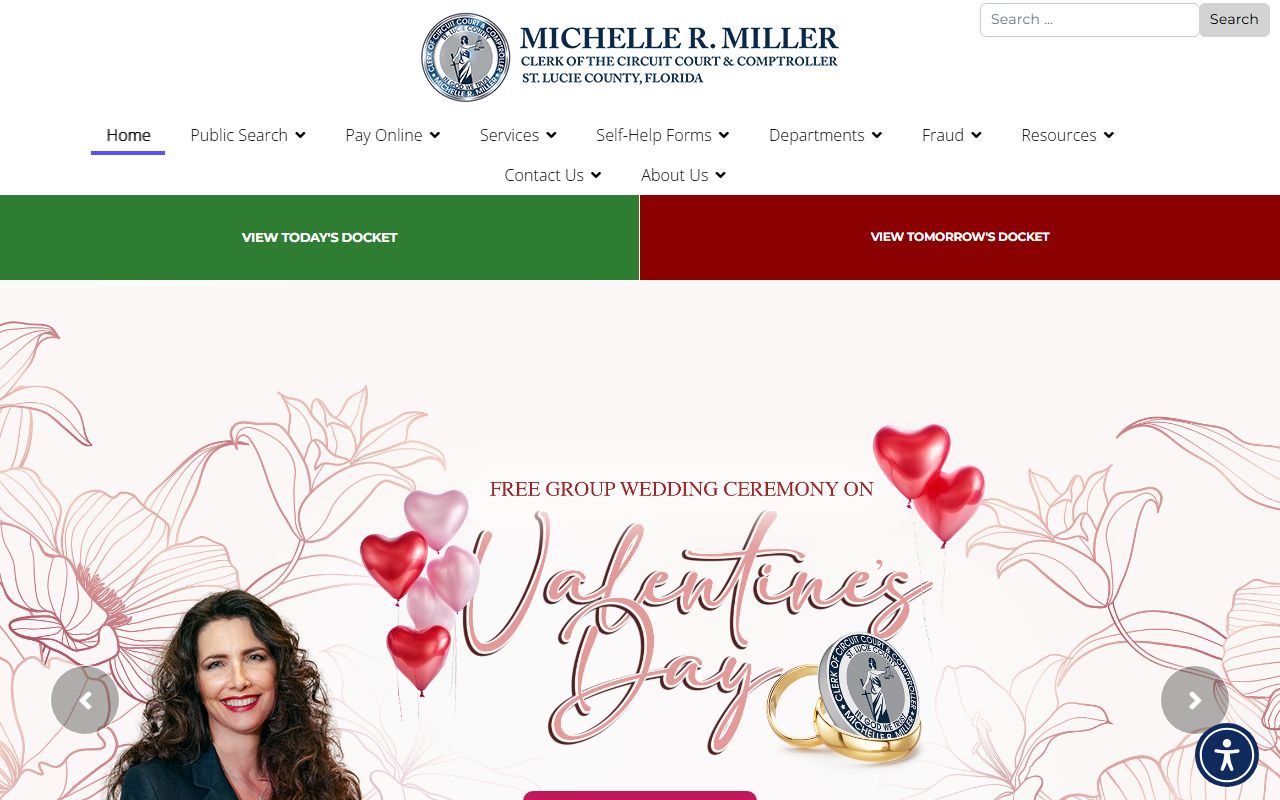
The site includes a direct search portal for civil and probate cases, links to fee schedules, and instructions for filing by mail or in person.
How to Search St. Lucie Probate Records Online
The clerk's case search is available through the St. Lucie Clerk website. You can search by the decedent's name, the personal representative's name, or a case number. Results will show the case type, filing date, judge assigned, and a list of documents on file. Some documents can be viewed online at no cost. Others may require you to request a copy in person or by mail.
Florida Courts also maintains a statewide resource page for each county's clerk office. This is useful if you are not sure which county handled a particular estate or if you need contact information for multiple counties. The Florida Courts "Find A Clerk" page lists all 67 county clerks with addresses and phone numbers.
Lead-in: The Florida Courts website lists clerk offices for all 67 counties, including St. Lucie. Use the Florida Courts Find A Clerk tool to locate the right office for any Florida probate matter.

The statewide directory is especially helpful when an estate spans more than one county or when a decedent owned real property in multiple locations.
To get certified copies of probate documents, you will need to pay a per-page fee plus a certification fee. The clerk's office can provide exact amounts when you call or check the fee schedule on their website. Copies of wills, letters of administration, and inventory documents are commonly requested by banks, title companies, and heirs.
Types of Probate Cases Filed in St. Lucie County
Florida law sets out several ways to handle a decedent's estate, and the right process depends on what the person left behind and how long ago they passed. The St. Lucie County probate court handles all of these case types.
Formal Administration is required when an estate is worth more than $75,000 or when the decedent has been dead for less than two years and the estate doesn't qualify for a simpler process. This is the full probate process. It requires a personal representative, court oversight, creditor notification, and a formal accounting in many cases. It can take six months to over a year to close.
Summary Administration is available when the total estate value is $75,000 or less, or when the decedent has been dead for more than two years. It is faster and less expensive than formal administration. There is no personal representative appointed. Instead, the court issues an order of summary administration that directs how assets are distributed. This process can sometimes be completed in a few weeks.
Disposition Without Administration is the simplest option. It applies only when the decedent left no real property and the only assets are exempt property or amounts needed to reimburse funeral costs and final medical bills. No estate is opened. The clerk issues a formal authorization letter that allows the person who paid those expenses to be reimbursed directly.
There are also ancillary probate cases, which come up when a person lived out of state but owned real property in St. Lucie County. In that situation, a probate case may need to be opened here even if the main estate is being handled elsewhere.
Fees for Probate Filings in St. Lucie County
Filing fees in St. Lucie County follow the Florida state fee schedule. The fee to open a formal administration case is based on the value of the estate. For estates valued at $1,000 or less, the fee is around $235. For larger estates, it increases from there. Summary administration petitions carry a separate, generally lower filing fee. The clerk can confirm current amounts before you file.
Beyond the filing fee, expect to pay for certified copies of letters of administration, certified copies of the will or court orders, and any recording fees if documents need to be recorded in the public records. Each certified copy carries a base fee plus a per-page charge. If you need copies sent by mail, a self-addressed stamped envelope speeds up the process.
Attorney fees in Florida probate are set by statute and are based on the value of the estate. This is separate from clerk fees. Some families handle small estates without an attorney, but for larger or contested estates, legal help is usually worth the cost.
Florida Probate Law: Key Rules That Apply in St. Lucie
Florida probate is governed by Chapters 731 through 735 of the Florida Statutes. A few rules are worth knowing before you file or search records.
Under Florida Statute 732.901, any person who holds a will must deposit it with the clerk of court in the county where the decedent lived within 10 days of learning of the death. This applies even if no estate is being opened. You can search for deposited wills at the St. Lucie Clerk's office. Wills on deposit are public record once the person has died.
Inventories and accountings filed in formal administration cases are confidential under Florida law. They are not available for public inspection. What is public are the petitions, orders, notices, and other procedural documents filed in the case. So while you can see that a case exists and track its progress, you won't be able to view a detailed list of the estate's assets unless you are a party to the case.
Florida also has homestead protections that affect how real property passes at death. In some cases, homestead property passes outside of probate entirely. This is a common source of confusion and is worth discussing with an attorney if real property is involved.
About the 19th Judicial Circuit
St. Lucie County is part of Florida's 19th Judicial Circuit, which also covers Indian River, Martin, and Okeechobee counties. Each county in the circuit has its own clerk of court and handles filings locally. The circuit court judges rotate through case assignments across the four counties. If you are researching an estate that involved property in more than one of these counties, you may need to check records at each county's clerk office separately.
The 19th Circuit's administrative offices are based in Fort Pierce. Judges assigned to probate cases in St. Lucie County hold hearings at the St. Lucie County Courthouse on Indian River Drive. Uncontested probate matters often proceed without a formal hearing. Contested cases, such as will disputes or challenges to a personal representative, do require court appearances.
Legal Aid and Local Resources
Legal Aid Service of Broward County extends coverage to the Treasure Coast area, including St. Lucie County, through its regional offices. Income-eligible residents may be able to get free help with probate matters. The Florida Bar's Lawyer Referral Service can also connect you with a local probate attorney for an initial consultation.
The St. Lucie County Law Library, located near the courthouse, has Florida Statutes, practice guides, and self-help materials. Library staff can help you find the right form or statute, but they cannot give legal advice. For straightforward cases like depositing a will or filing for disposition without administration, the self-help resources at the clerk's office are a good starting point.
Cities in St. Lucie County
One city in St. Lucie County meets the population threshold for a dedicated page. Probate filings for residents of all cities in the county are handled at the St. Lucie County Clerk's office in Fort Pierce.
Other cities in the county, including Fort Pierce and Stuart-area communities, fall below the population threshold and do not have separate pages. Residents of those areas file probate cases at the same Fort Pierce courthouse.